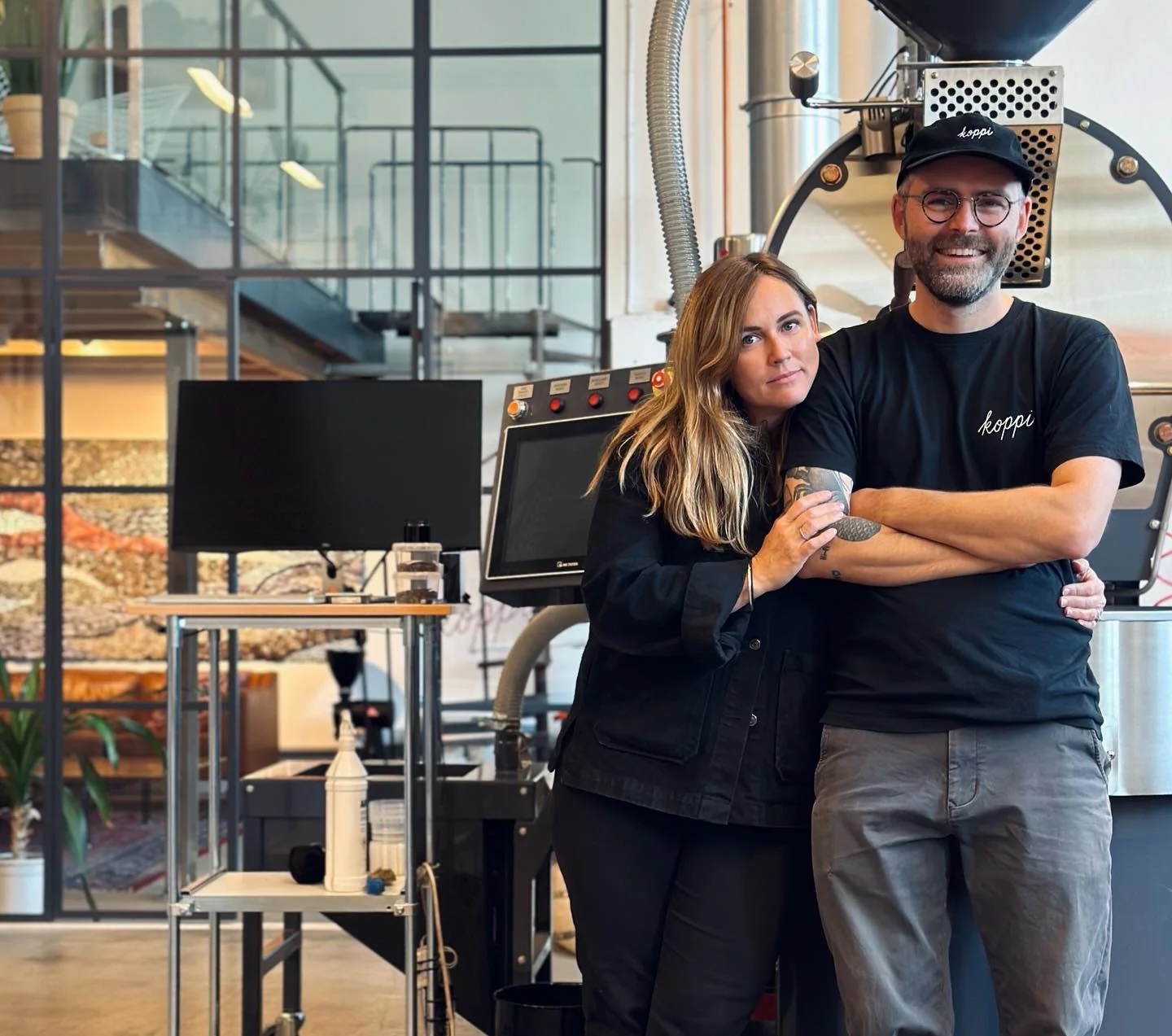
Koppi Roasters was founded in 2007 in Helsingborg as a café with its own roastery. Behind these two decades of success are husband and wife Anne Lunell and Charles Nystrand—barista champions who turned their hobby into one of the world’s most respected roasteries. Today, Koppi supplies coffee to partners on every continent.
Charles won the Swedish Barista Championship in 2005, and Anne followed suit a year later. The two then moved to Oslo, where Charles worked for Robert Thoresen, the first-ever World Barista Champion. The experience they gained in Norway brought them back to Sweden—literally overnight. Chef Niklas Ekstedt offered them a space in downtown Helsingborg, and they signed the lease within two weeks. The name Koppi? It comes from the Indonesian word for coffee, “kopi”—they added a second “p” because they liked the way it looked better.
In 2016, the pair decided to close the café and focus exclusively on roasting, which they moved to a spacious industrial hall. Today, approximately 90% of Koppi’s production goes abroad, and the roastery’s name is known in coffee circles from Wellington to Barcelona. Their roasting philosophy is simple: maximize the coffee’s sweetness and acidity, minimize the bitterness. Anne regularly travels to meet producers directly on their farms to build long-term relationships and ensure farmers receive fair compensation for their work. In 2013, Koppi was named “Årets kaffebar” – Café of the Year – by Sweden’s White Guide Café.
Coffees from Koppi Roasters
Nougat, apple, vanilla
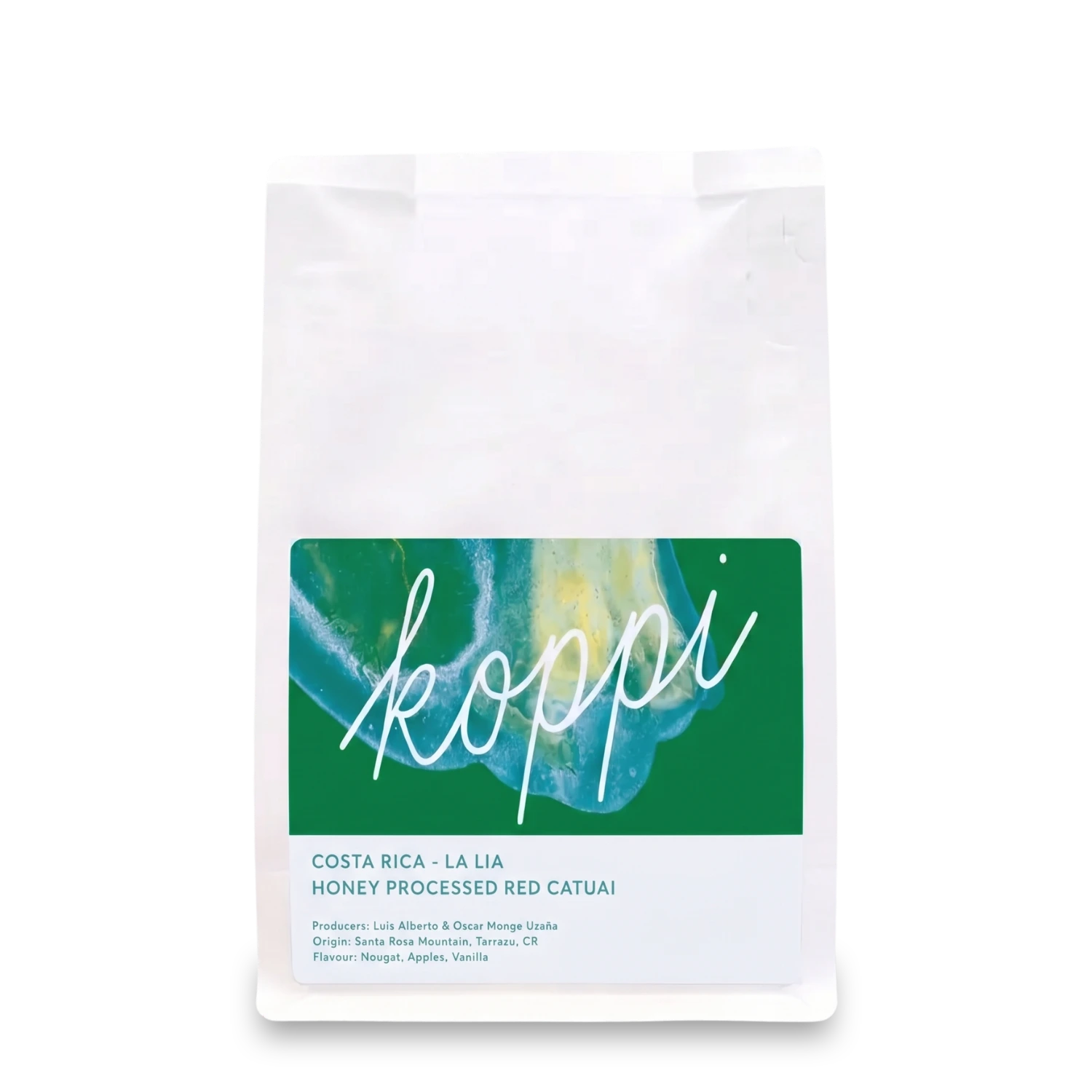
La Lia White Honey Catuai
Koppi RoastersKoppi Roasters, based in Helsingborg, Sweden, sourced coffee from the La Lia farm in Costa Rica’s Tarrazú region—and the result is exactly what you’d expect from them: clean, authentic, and full of character.
Behind this harvest are brothers Luis and Oscar Monge, whose beans—processed using the white honey method—produce a cup that works equally well in an espresso machine or a drip coffee maker. Finca La Lia is located in the heart of Tarrazú—a region in southern Costa Rica that ranks among the most respected coffee-growing areas in Central America. The plantations stretch across an elevation of 1,700 meters above sea level, where significant temperature differences between day and night slow down the ripening process and allow for the development of complex flavor profiles. The Red Catuai variety, processed using the white honey method—that is, leaving part of the mucilage layer on the parchment—gives the coffee a rounded body and sweetness without overpowering its natural freshness. In the cup, it all comes together surprisingly elegantly: nougat-like depth, the gentle acidity of a ripe apple, and a vanilla finish that lingers for a moment after the last sip. The Omni version is designed to work across brewing methods—espresso made with it has a velvety texture, while pour-over offers clarity and lightness. However, we recommend it primarily for espresso.
This coffee is only available in our monthly subscription. Join us and discover new flavors every month!
Choose Subscription
Dark chocolate, stone fruits, sweetness
Finca El Porvenir, Tabi
Koppi RoastersSandra and Hector Mora grow coffee on their farm in the heart of Colombia’s Huila region with a care that is unmistakable in every cup. Tabi is a variety with character, and here it has the chance to shine.
Finca El Porvenir is located in the Palestina region in southern Huila, one of Colombia’s most prestigious coffee-growing areas. Sandra and Hector purchased the farm in 2006 and cultivate five of its twelve hectares—the rest is left as a nature reserve. The farm is home to approximately 20,000 Caturra trees, 4,000 Tabi trees, and 300 young Pink Bourbon trees. Interestingly, the Moros have bred their own population from two leaf rust-resistant Caturra trees—for now, they call it Caturra Mejorado. The entire farm operates organically, without chemical fertilizers or pesticides. They apply their own compost once a year and are convinced that this benefits not only the coffee but also the surrounding ecosystem. Processing is precise and meticulous. The cherries are sorted and picked by hand; the harvest lasts about a month and then begins again. Tabi undergoes a 48-hour wet fermentation—slightly longer than Caturra, which requires only 36 hours. After fermentation, the coffee is pre-dried for five days on raised African beds and then moves to a newly built shaded drying area, where it matures for another twenty days or so. Koppi Roasters from Helsingborg, Sweden, purchase the farm’s entire production and describe their long-term relationship with the Mor family as a true friendship—which is simply evident in the resulting coffee profile.
This coffee is only available in our monthly subscription. Join us and discover new flavors every month!
Choose SubscriptionWant to taste coffees from Koppi Roasters?
With our subscription, you can taste coffees from various European roasters every month. Fresh specialty coffee delivered right to your door.
Learn more about subscription →