
Coffee of
the month
November 2026
Every month we select exceptional coffees from the best European roasters. Discover what awaits you.
Roasters of the Month
This time we selected coffees from these exceptional roasters
Kava Family
Croatia, Split
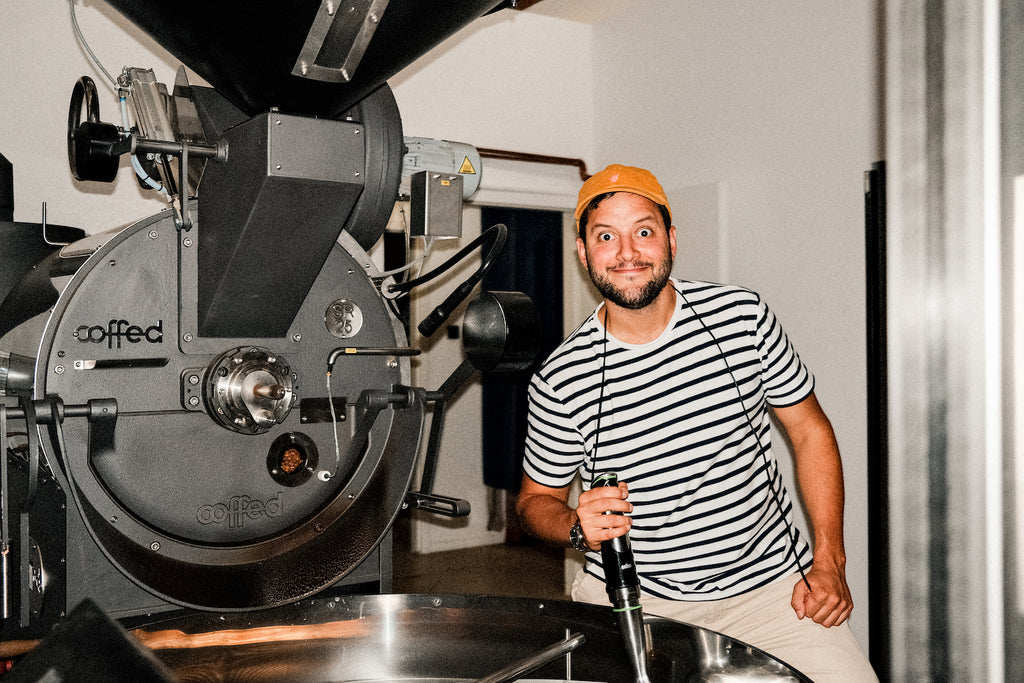
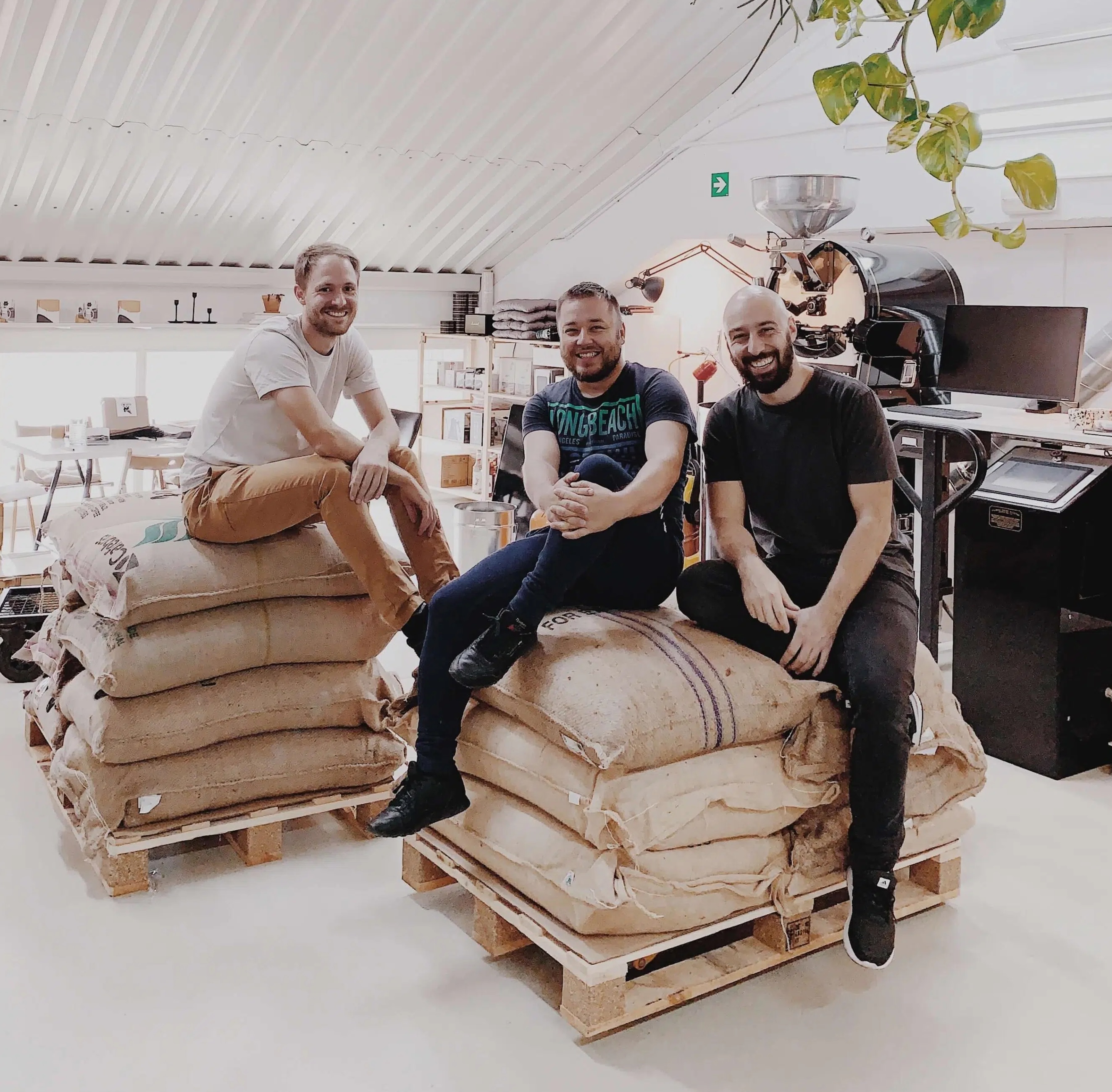
The kava family roastery was founded in 2018 when Ivana and Marko decided to open their first coffee place on the island of Hvar after years of travelling for wedding photography. From an abandoned space, they created kava37 café and gradually expanded their project to other businesses in Split - kava2 café and their own kavaRO roastery. Their concept is based on simplicity: the name "kava" (Croatian for coffee) accompanied by the number of the house in which the café is located.
Populus
Germany, Berlin
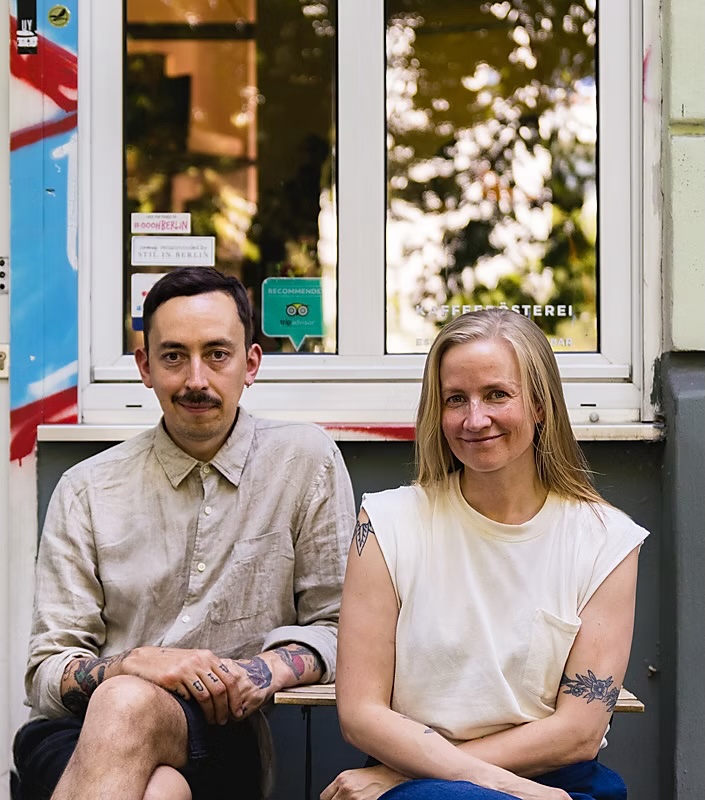
Populus Coffee is a family-run specialty coffee roastery founded in 2016 by Finnish husband-and-wife team Sari and Henrik Haavisto in Berlin’s Neukölln district. They focus on a light Nordic roast and on relationships with farmers they know personally. In ten years, what started as a small café by the canal has grown into a roastery that now operates in both Berlin and Shanghai.
Coffees of the Month
These specialty coffees are part of our current subscription
Amederaro Konga
Kava Family
Amederaro Konga
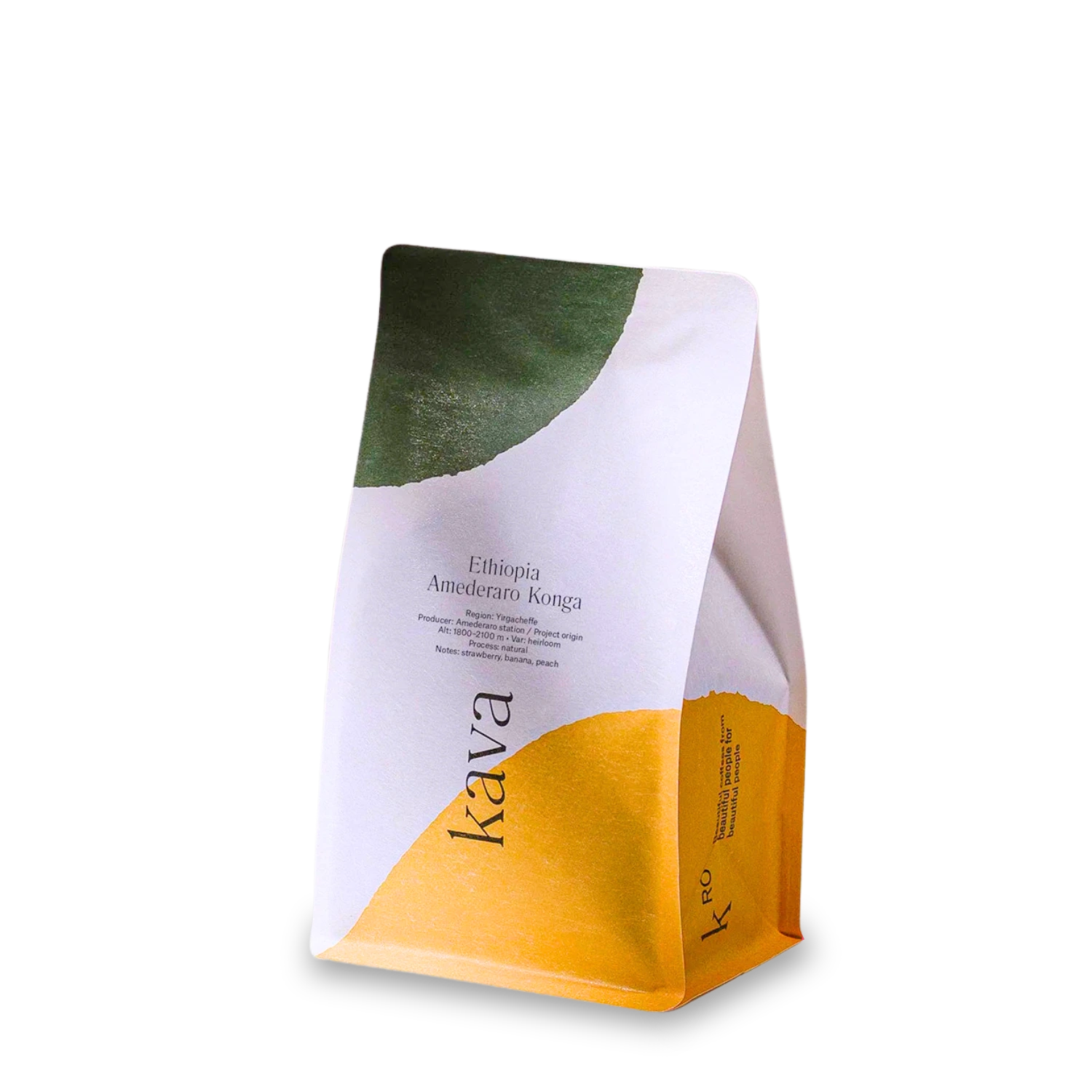
Kava FamilyThe Croatian roastery kava.family from Split came across this natural Ethiopian coffee during a trip to its country of origin in February, and it was impossible to overlook it on the cupping table. An intense, fragrant fruit bomb with notes of strawberry, peach, and banana.
Behind the coffee is the export company Primrose, led by husband and wife Meseret and Abraham, and a processing station built right next to a school near the town of Wete. Primrose and Project Origin collaborate with teachers there and help secure funds for the education of local children. This improves both the quality of life and the quality of the coffee. The owners chose this location because of its access to electricity—which is not a given in rural Ethiopia—so the station can process coffee cherries even after dark. The coffee is grown by small-scale farmers in the gardens next to their homes (so-called “garden coffee”), and their harvests are combined into shared lots at the station. Primrose then takes great care in sorting the beans: the green beans pass through a color sorter at least three times and are hand-sorted three times.
Parameters
Costa Rica Aquiares
HAYB Coffee
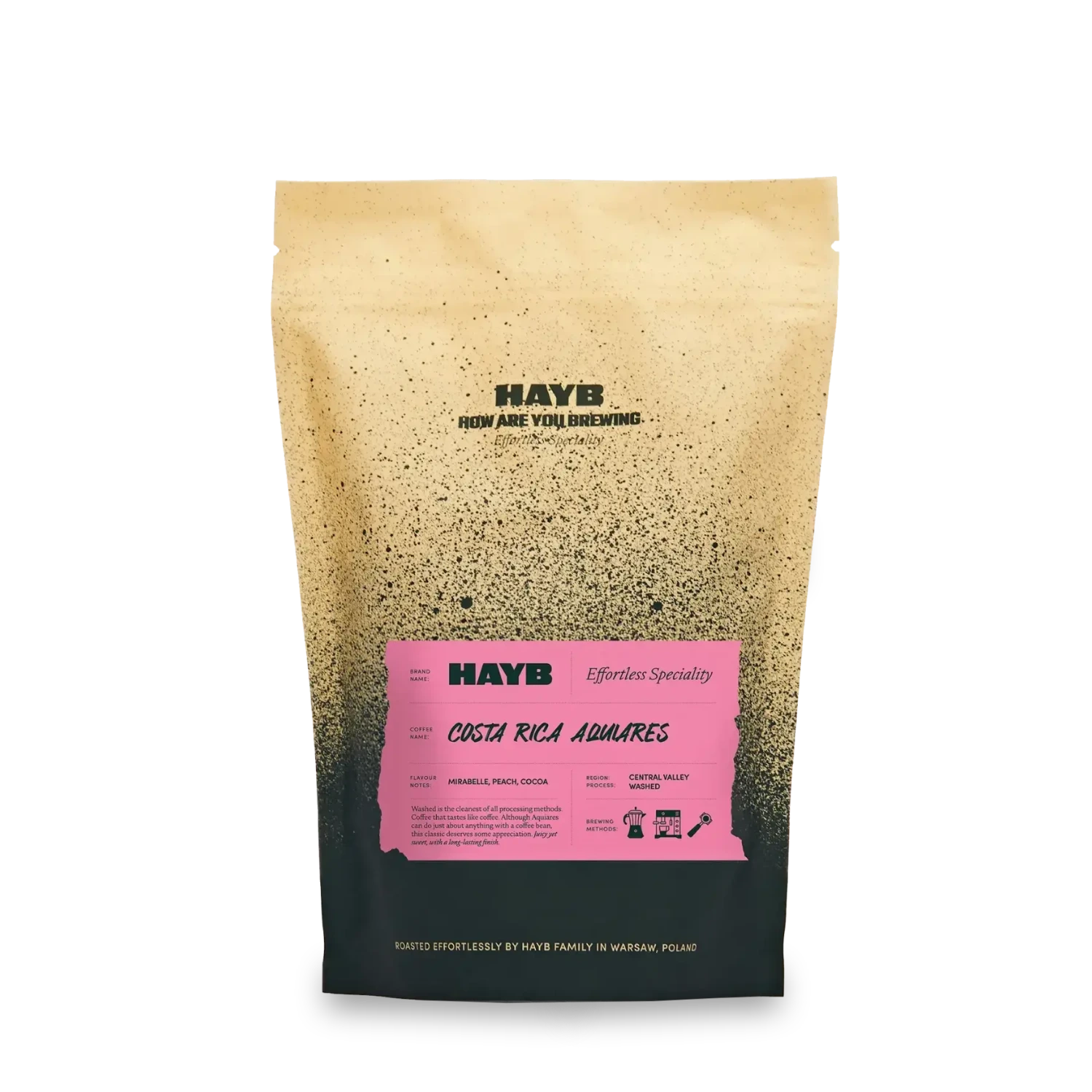
Costa Rica Aquiares
HAYB CoffeeThe Warsaw roastery HAYB has opted for simplicity with this espresso: washed coffee from one of the oldest farms in Costa Rica that simply tastes like good coffee. Mirabelle plums, peach, and cocoa, with a juicy mouthfeel and a long finish.
The beans come from the Aquiares farm, located on the slopes of the Turrialba volcano in the Cartago province of Costa Rica. In the language of the indigenous Huetar people, its name means “land between rivers.” The farm was founded in 1890 by the British Lind family, and with an area of 924 hectares, it is now the largest contiguous coffee plantation in Costa Rica. Coffee trees cover about 80% of the area; the rest is forest. The Robelo family manages the day-to-day operations. Diego Robelo has been running the farm since 2013. Since 2000, they have planted over 50,000 native shade trees here, and according to certification under Costa Rica’s NAMA Café program, Aquiares now sequesters more than four times as much carbon as it emits. A community of roughly 1,800 people lives around the farm.
Parameters
Gaaki AA
Populus
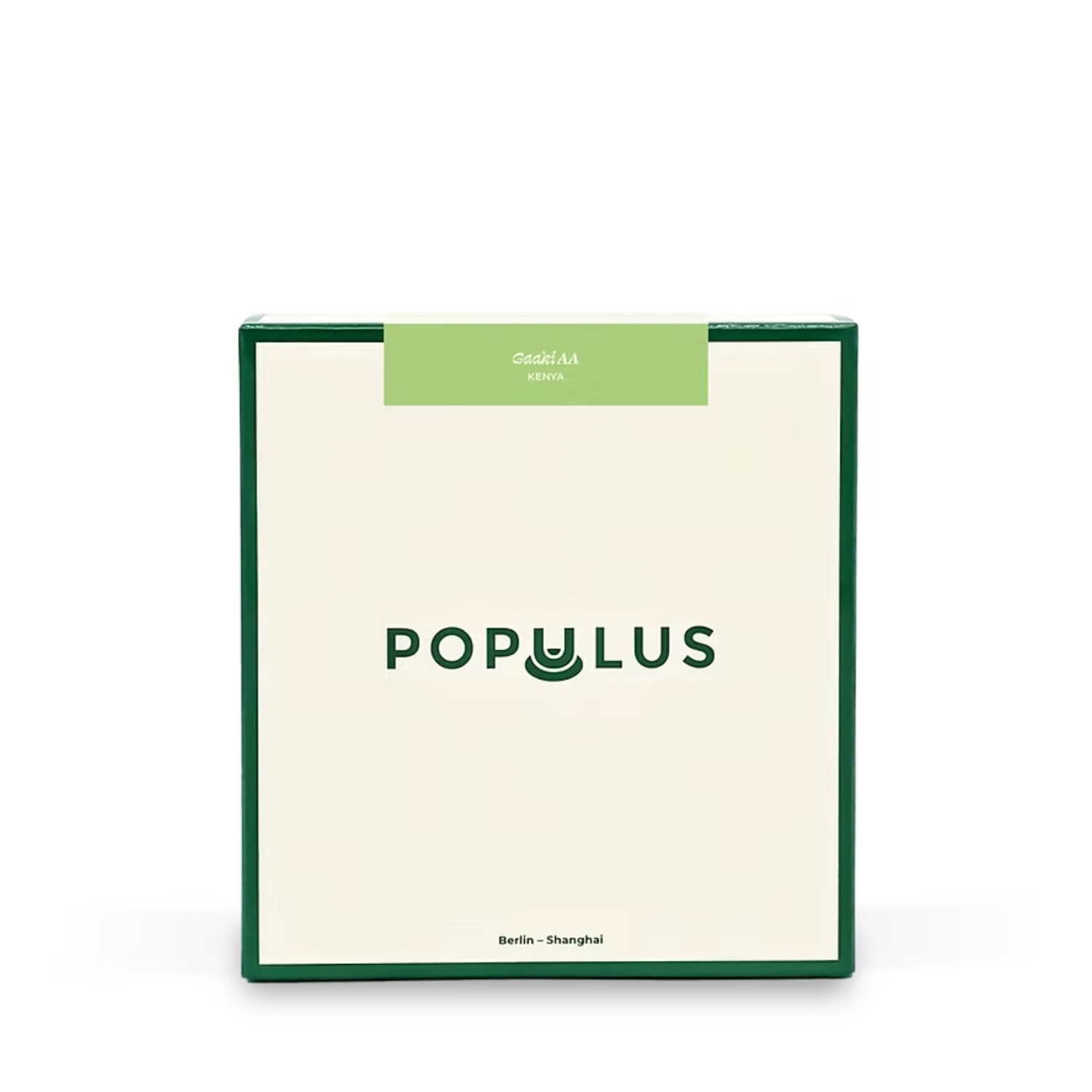
Gaaki AA
PopulusWashed Kenyan coffee from the Gaaki station in the Nyeri region, sourced by the Berlin-based roaster Populus Coffee through direct contacts in the region. In the cup: classic Kenyan blackcurrant notes, floral aromas, and a lively acidity.
The link between the cooperative and the roastery was Phyllis Nganga, a prominent figure in the East African specialty coffee scene. Populus met her during a trip to Kenya in 2023. Phyllis trains cooperatives in harvesting, processing, and fermentation, and connects them directly with foreign roasters—including those in Northern Europe this season. The roastery has also announced a FOB price of $12 per kilo. In the cup, Gaaki delivers exactly what you’d expect from Kenya: a lively acidity, a juicy body, black currant, gooseberry, fragrant flowers, and lemongrass. As an espresso, it resembles a lemon candy with black currant and a syrupy texture. In a cappuccino, it softens into milky caramel with green grapes, honey, and a tartlet with wild berries.
Parameters
Peace Easy
Populus
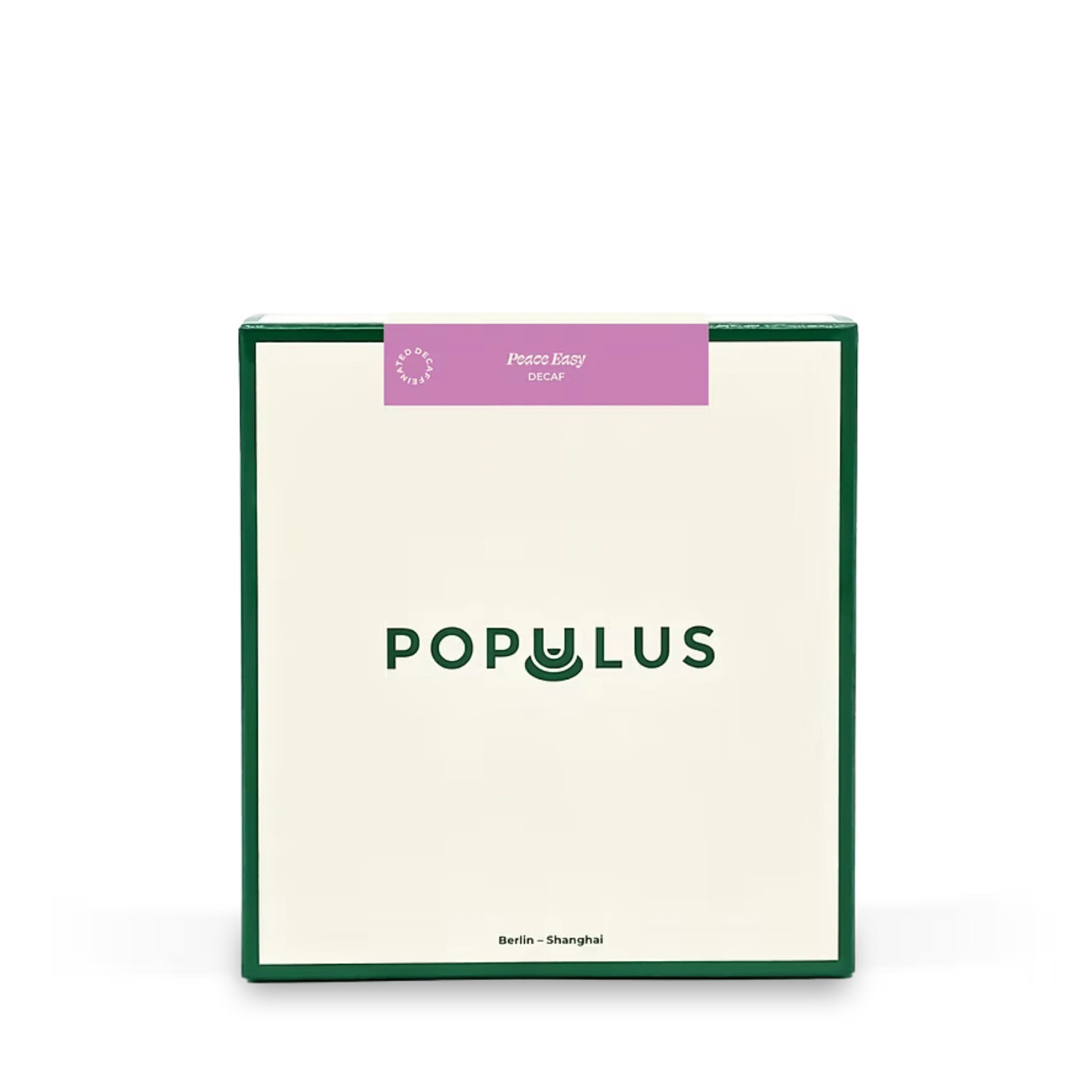
Peace Easy
PopulusThe Berlin-based roastery Populus Coffee claims that its decaf Peace Easy is probably the best decaf you’ve ever tasted. This Colombian regional blend from Huila is meant to taste like real coffee—just without the shaky hands.
Caffeine is removed from the beans using the so-called cane method. The green beans are first gently steamed to open their pores, and then they are transferred to tanks containing water and ethyl acetate. The ethyl acetate is derived from molasses, a byproduct of sugar production. The ethyl acetate binds to the caffeine and, in about 24 hours, removes 98 to 99% of it from the beans. Because neither high pressure nor high temperature is used in this process, the coffee remains sweet and fresh and does not lose the flavor of its origin. Populus provides tasting notes for filter coffee, espresso, and cappuccino. In a filter brew, notes of cherry, molasses, marzipan, and white grapes are detectable, and the cup is round and sweet with a hint of apple acidity. The espresso offers notes of milk chocolate, almond butter, and fresh cherries, with a good texture and a creamy body. In a cappuccino, brown sugar and almonds come to the fore, complemented by the freshness of cherries.
Parameters
Rwanda Muhondo
HAYB Coffee
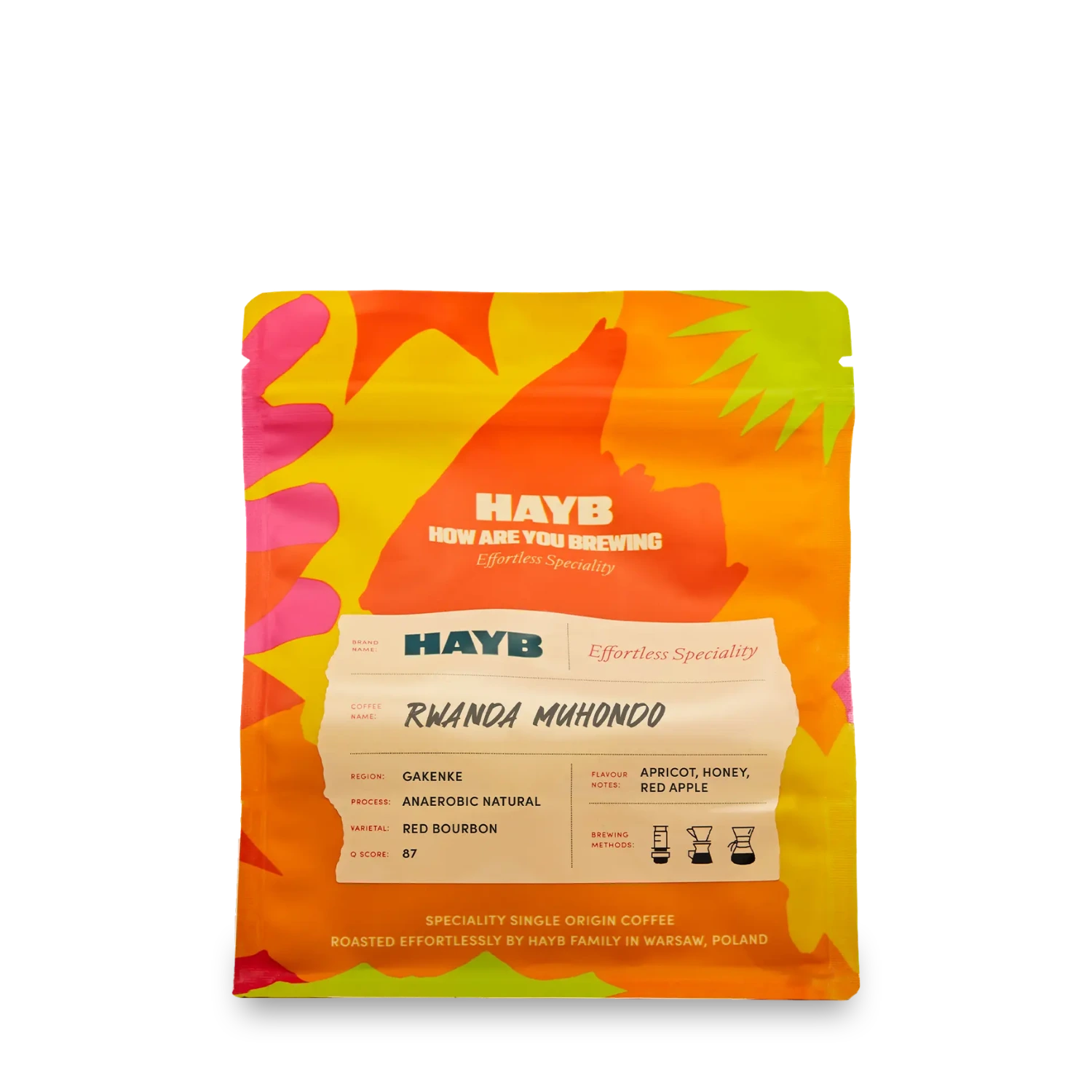
Rwanda Muhondo
HAYB CoffeeThe Warsaw roastery HAYB has had this coffee on its menu so many times that it has lost count. This anaerobic natural coffee from the Gakenke district of Rwanda has aromas of apricots, honey, and red apples.
Muhondo is by no means a newcomer to the world of specialty coffee. The station in the Muhondo sector of the Northern Province was built in 2006 by the Terimbere Kawa Yacu cooperative and has been fully operated by the Muhondo Coffee Company since 2013. In the 2014 Rwanda Cup of Excellence, it won the Presidential Award with 91 points and finished third the following year. It works with approximately 1,800 farmers, 40% of whom are women. This year’s lot is Red Bourbon from 1,800 meters, processed using the anaerobic natural method. In Rwanda, where washed coffee clearly dominates, this is a relatively unusual choice. The result is a juicy cup with a Q score of 87, featuring notes of apricot and honey, complemented by a hint of fresh red apple. HAYB roasts it for drip brewing. For a V60, they recommend 18 g of coffee per 300 ml of water at 96 °C.
Parameters
Want to receive similar coffees regularly?
Subscribe to our subscription and a box with selected coffee specials will be waiting for you at the pickup point.
Learn more about subscription →