What you'll need
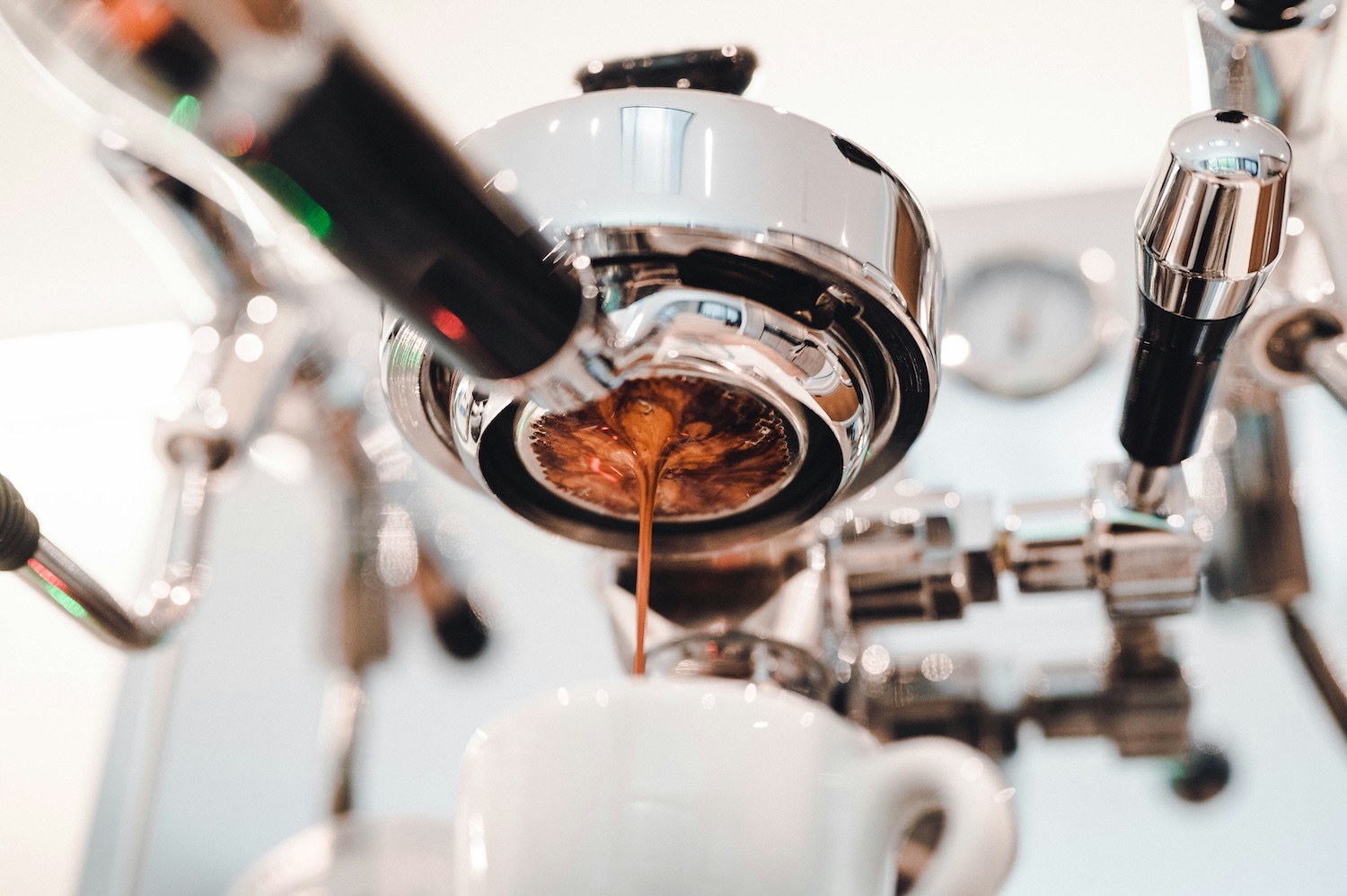
- An espresso machine: this guide is for traditional portafilter machines. With bean-to-cup machines, the machine takes care of most steps for you.
- An espresso grinder: with fine, ideally stepless adjustment. It's the most important investment – even an expensive machine can't rescue coffee from the wrong grinder.
- A digital scale: accurate to 0.1 g, ideally with a built-in timer.
- A tamper: whose diameter exactly matches your portafilter basket.
- Fresh beans: for espresso, ideally at least a week after roasting, once the coffee has rested and released most of its carbon dioxide.
Espresso recipe: dose, ratio and time
To start with, stick to the recipe most specialty coffee cafés work with:
- Dose: 16–18 g of ground coffee, depending on the size of your double basket
- Yield: double the dose, i.e. 32–36 g of espresso in the cup (a 1:2 ratio)
- Extraction time: roughly 25–30 seconds from the moment you start
- Water temperature: 92–94 °C, or a degree or two higher for lighter roasts
You weigh the yield rather than measure its volume. Crema distorts volume a lot, and the same 36 g can look different in the cup every time. Put your cup straight on the scale and stop the shot once it hits your target weight.
Making espresso step by step
Most espresso problems don't start in the machine – they start in the portafilter. Water under roughly 9 bars of pressure always finds the path of least resistance. If the coffee in the basket is unevenly distributed, the water rushes through the weaker spots and the rest stays under-extracted. Baristas call this channeling.
- Grind the coffee straight into the portafilter and check the dose on the scale.
- Distribute it evenly. A needle tool (WDT) that breaks up clumps helps, as does a distributor that levels the coffee in a single twist.
- Tamp. How hard you press matters less than tamping level. Rest the portafilter on the edge of the counter or on a silicone mat so it doesn't slip.
- Consider a puck screen. A thin metal screen placed on top of the tamped coffee spreads the water from the shower head more evenly and keeps the group head cleaner. Not essential, but it helps.
- Start the shot straight away. If the portafilter sits in the hot group head, the coffee starts heating up before any water reaches it.
Whether it's a tamper, distributor or screen, check the diameter – it has to match your machine's basket.
Tip: After the shot, take a look at the knocked-out puck. Holes, cracks or soggy spots give channeling away. Next time, focus more on distribution and level tamping.
How to dial in espresso by taste
A recipe is a starting point, not dogma. Every coffee behaves a little differently, so you need to dial it in. The main tool in your hands is grind size:
- Espresso is sour, salty, thin and runs fast (under 20 s): the coffee is under-extracted. Grind finer.
- Espresso is bitter, astringent, dries your tongue and runs slowly (over 35 s): the coffee is over-extracted. Grind coarser.
- The time is right but the flavour is flat: try stretching the ratio to 1:2.2–1:2.5 or raising the water temperature.
Always change just one variable at a time, otherwise you won't know what actually helped. And don't worry about sacrificing a few shots – even café baristas pour a few espressos down the sink every morning before the coffee is dialled in.
Common mistakes when making espresso at home
- Stale or pre-ground coffee: espresso is extremely sensitive to freshness, and ground coffee loses its aroma within minutes. More in our article Whole bean or ground coffee?
- A machine that hasn't warmed up: give it at least 15–20 minutes, with the portafilter locked into the group head.
- Measuring by eye: without a scale, you can't repeat a good result or fix a bad one.
- Neglected cleaning: old coffee oils turn rancid and their taste carries into every cup. Wipe the shower screen after every use, and regularly take the basket out and wash it.
Which coffee to choose for espresso
To begin with, reach for coffee roasted for espresso. It's usually developed a little longer, extracts more easily and is more forgiving. Coffees with a classic profile – notes of chocolate, nuts and caramel, typically from Brazil, Colombia or Guatemala – are the easiest to work with. Fruity coffees from Ethiopia or Kenya are harder to dial in, but once you're more confident, they'll reward you. We explain the difference between espresso and filter coffee in our article Espresso roast vs. filter roast.
Fresh espresso coffee every month
Choose the "Espresso" type in your KAVI coffee subscription and we'll send freshly roasted beans from European micro-roasters to your door. You set the amount and frequency yourself, and you can cancel any time.
Frequently asked questions
How many grams of coffee should I use for espresso?
Usually 16–18 g for a double basket and 7–9 g for a single. Go by the size of your basket – better-quality baskets often have the recommended dose stamped on them.
What is the right espresso ratio?
The standard is 1:2 – 18 g of coffee gives you 36 g of espresso. A shorter, denser ristretto is made at around 1:1.5, a longer lungo at 1:3 and above.
Why is my espresso sour?
Most often it's under-extraction – the coffee is ground too coarse or the water isn't hot enough. Try grinding finer. Coffee that's too fresh and hasn't rested long enough can also taste sour.
How long should an espresso shot take?
Roughly 25–30 seconds. But time is just a guide – taste is what counts. If your espresso tastes good and runs for 23 or 33 seconds, everything is fine.