Wondering what the difference between arabica and robusta actually is? These two names appear on almost every bag of coffee. They are the two most widely grown coffee species, and they differ not only in taste but also in caffeine content, price and growing conditions. In this article we explain in detail how arabica and robusta differ, how to spot quality, and why the world of specialty coffee revolves mainly around arabica.
Arabica and robusta: two different coffee species
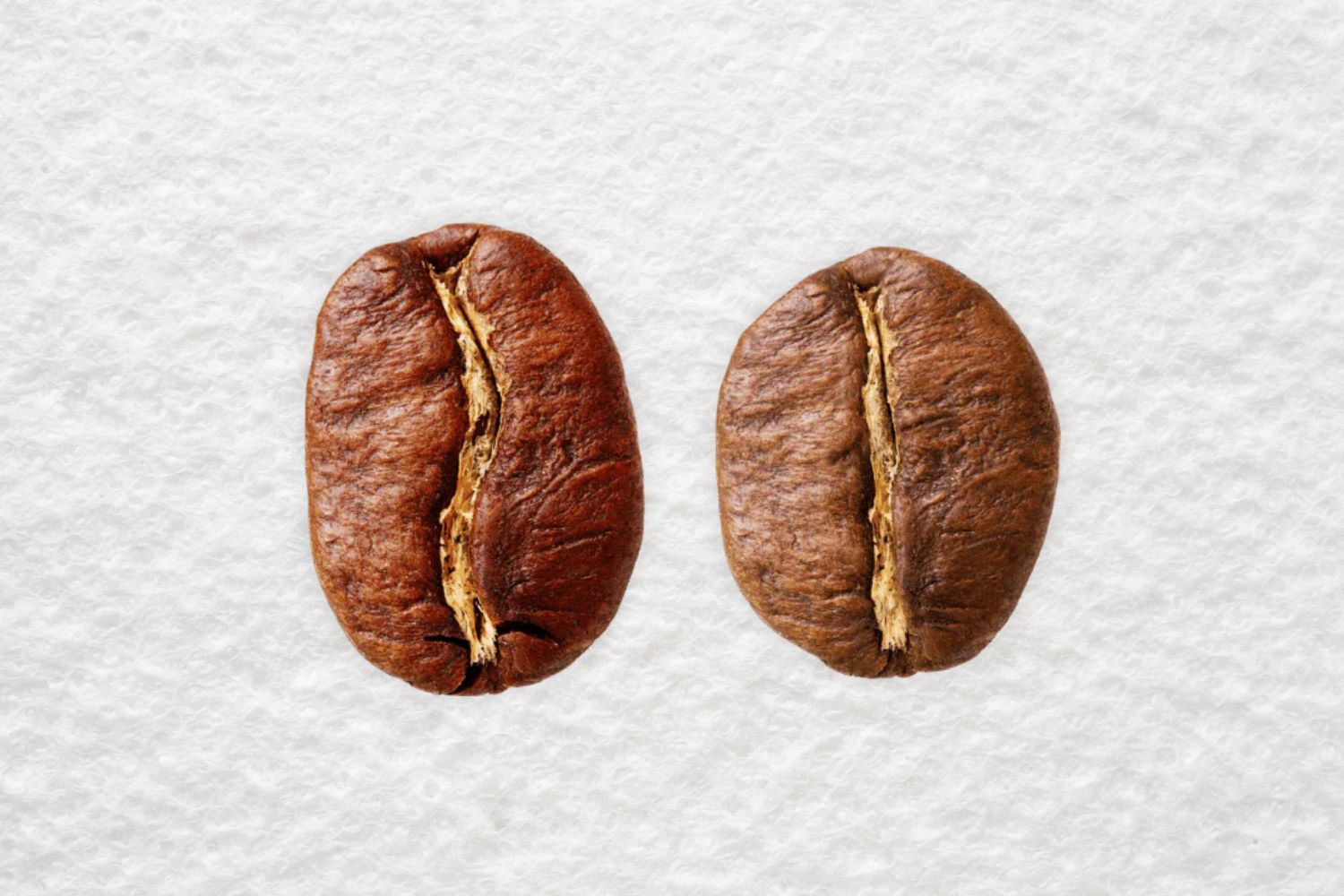
Although both plants belong to the same genus Coffea, they are distinct botanical species with different properties. Together they cover the vast majority of world coffee production – arabica roughly 60–70 %, robusta the rest. The difference between arabica and robusta does not start in the cup, but on the plantation: in altitude, climate and the resilience of the plant.
Arabica: delicacy, aroma and a wealth of flavours
Arabica (Coffea arabica) grows at higher altitudes, most often between 900 and 2,000 metres above sea level. It is harder to cultivate, more sensitive to disease and weather swings, and yields less fruit. That is exactly why it costs more – but the reward is a far more complex and delicate flavour that coffee lovers value so highly.
- Taste: delicate, aromatic, with fruity, floral, chocolate or nutty notes
- Acidity: higher and pleasant, giving the coffee liveliness and freshness
- Caffeine content: lower, roughly 1.2–1.5 %
- Cultivation: higher altitudes, a more demanding and sensitive plant
Thanks to its lower caffeine content and higher acidity, arabica tastes fuller and more balanced. It is the choice wherever you want to taste the origin of the bean and its character.
Robusta: strength, caffeine, bitterness and crema
Robusta (Coffea canephora) is the more resilient species, growing at lower altitudes and tolerating hotter, more humid climates. It contains almost twice as much caffeine as arabica, which naturally protects it from pests. In terms of flavour it is bolder, more bitter and more earthy, which is why it is often used in espresso blends.
- Taste: strong, bitter, earthy, sometimes nutty or woody
- Acidity: low
- Caffeine content: high, roughly 2.2–2.7 %
- Crema: produces a thicker, more stable foam on espresso
- Cultivation: lower altitudes, a hardy and more productive plant
Quality robusta has its place on the coffee scene – particularly as part of espresso blends, where it adds body, a bitter structure and a rich crema. Cheap, poorly processed robusta, however, is often the reason some commercial coffees taste flat and bitter.
Arabica vs. robusta: the main differences at a glance
If you want to remember the difference between arabica and robusta simply, it comes down to a few points:
- Taste: arabica delicate and aromatic × robusta strong and bitter
- Caffeine: arabica less × robusta almost double
- Acidity: arabica higher and pleasant × robusta low
- Price: arabica more expensive × robusta cheaper
- Cultivation: arabica high altitudes and demanding × robusta lowlands and hardy
Why does specialty coffee rely on arabica?
Specialty coffee is judged on flavour complexity, cleanliness and balance. And that is exactly where arabica excels – it can offer dozens of recognisable flavour notes that reflect the variety, the soil, the altitude and the processing method. This is why the vast majority of specialty coffees are made from 100% arabica.
That does not mean robusta has no place in the specialty world. Interest is growing in carefully grown and meticulously processed robusta, which can be surprisingly clean and interesting. The key is not the species itself, but the quality and care in growing and processing.
Want fresh specialty coffee every month?
With a KAVI coffee subscription we deliver freshly roasted beans from the best roasteries straight to your door. You choose the coffee, the amount and how often – and you can pause or cancel any time.
How to recognise quality coffee regardless of species
Whether you reach for arabica or a blend with robusta, even a beginner can spot quality from a few clues:
- A roast date on the bag (not just a best-before date) – freshness is essential
- Information about the coffee's origin (country, region, farm or roastery)
- A stated processing method and flavour profile
- An opaque bag with a one-way valve that protects the coffee
So which coffee is better?
There is no universal winner – it depends on what you want from your coffee. If you are looking for a delicate, aromatic coffee with a story and a wide palette of flavours, reach for 100% arabica. If you love strong, bitter espresso with a rich crema and a higher caffeine kick, you will appreciate a quality blend containing robusta.
The best way to find your favourite is to experiment. Taste coffees of different origins, species and processing methods, and pay attention to what suits your palate most.
Frequently asked questions
Is arabica always better than robusta?
Not necessarily. Arabica tends to be more delicate and aromatic, but well-processed robusta can be excellent – especially in espresso. Quality and freshness matter more than species alone.
Does robusta have more caffeine?
Yes. Robusta contains roughly twice as much caffeine as arabica, which is also why it tastes bolder and more bitter.
Why is arabica more expensive?
It grows at higher altitudes, is harder to cultivate, more susceptible to disease and yields less. The higher price reflects more demanding production and better flavour characteristics.