What coffee processing actually is
A coffee bean is really a seed hidden inside the fruit of the coffee plant – the coffee cherry. Under the thin skin there's sweet pulp, then a sticky layer called mucilage, a parchment layer, and only then the bean itself. Processing covers everything that happens between harvest and the moment the green bean is dried to around 10–12% moisture and ready to travel to the roaster.
During processing, fermentation takes place – yeasts and bacteria break down the sugars in the pulp and mucilage. How long this lasts, and under what conditions, has a huge influence on the final flavour.
Washed coffee: clarity and sparkle
With washed coffee, the skin and pulp are removed right after harvest. The beans, still coated in mucilage, then ferment in tanks, usually for 12 to 48 hours. After that the mucilage is thoroughly washed off with water and the beans are dried on patios or raised beds.
The result is a clean, transparent cup with brighter, more pronounced acidity. Washed coffee shows most faithfully what the variety, altitude and soil created in the bean. You'll typically find it in coffees from Kenya, Colombia, Central America or Ethiopia's Yirgacheffe. Expect descriptions like citrus, bergamot, black tea, jasmine on the bag.
Natural process coffee: a sweet fruit bomb
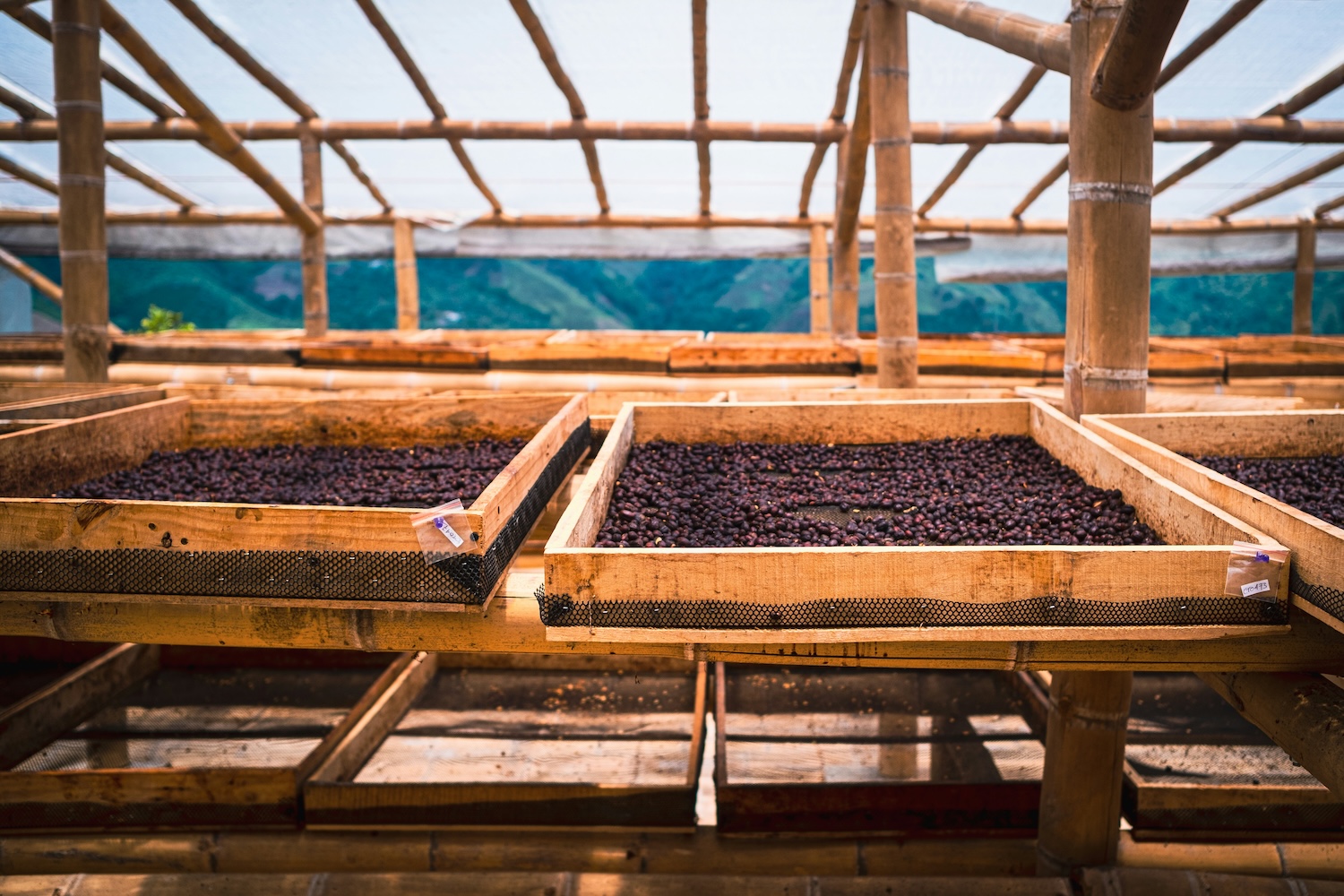
The natural (or dry) process is the oldest of all coffee processing methods. Whole cherries are spread out in the sun, most often on raised "African beds", and dried with the fruit still on – for two to six weeks, depending on the weather. Farmers have to turn them regularly so they dry evenly and don't go mouldy.
During that time the bean absorbs sugars and aromatic compounds from the fruit. You'll taste it straight away: natural process coffee tends to be sweeter, with a fuller body and distinct notes of ripe or dried fruit such as strawberries, blueberries or mango. It can even be winey, and the acidity is usually softer. Naturals demand a lot of care, though – if drying goes wrong, the coffee tastes overripe or musty. The method is typical for Ethiopia and Brazil.
Tip: Want to taste the difference for yourself? Compare two coffees from the same country but with different processing – for example the washed Ethiopian Gotiti and the natural Awata Mesina. Same country, a completely different cup.
Honey: the golden middle ground
The honey process combines both previous approaches. The skin and pulp are removed, but the mucilage stays on the beans and dries together with them. The name has nothing to do with actual honey – it refers to the sticky, golden layer that coats the beans while they dry.
Depending on how much mucilage is left and how slowly the beans dry, you'll see white, yellow, red and black honey. The "darker" the label, the sweeter and fuller the coffee tends to be. Honey coffees offer the sweetness and body of a natural with a clarity closer to washed coffees. Expect notes like cane sugar, honey, stone fruit. Costa Rica is the country that made the method famous.
Anaerobic fermentation and other experiments
In recent years, specialty coffee has also become a playground for experiments. In anaerobic fermentation, cherries or beans are sealed in tanks without oxygen while the farmer closely monitors time and temperature. Others try thermal shock (a sudden change in temperature) or co-fermentation with fruit or selected yeasts.
The results tend to be very intense flavours – red wine, tropical fruit, liqueur, cinnamon. Some people love these coffees, others argue they no longer taste much "like coffee". Both views are fine – treat them as an experience, not an everyday standard.
How to choose by processing method
- You like clean, fresh, "tea-like" coffees: go for washed.
- You want sweetness, full body and lots of fruit: try a natural.
- You can't decide: honey is a safe compromise.
- You're after something unusual: anaerobic and experimental processing.
Processing is only one piece of the puzzle, though. Variety, altitude and roast level all play a role too. If you want to understand bag descriptions even better, read our article on how to read a coffee flavour profile.
Taste different processing methods every month
With a KAVI coffee subscription, freshly roasted beans from European micro-roasters arrive right at your door. The selection changes every month, so you'll gradually taste coffees from different countries and with different processing methods.
Frequently asked questions
What is natural process coffee?
Coffee whose cherries are dried whole, with the fruit still on, after harvest. It tends to be sweeter, fruitier and fuller-bodied than washed coffee.
Is natural coffee better than washed?
It's neither better nor worse, just different. Naturals are usually sweeter and fruitier, washed coffees cleaner and fresher. It all comes down to what you enjoy.
Does honey process coffee contain honey?
No. The name refers to the sticky mucilage left on the beans during drying. No honey is added to the coffee.
Is washed coffee more acidic?
Its acidity tends to be more pronounced and easier to pick out, because it isn't softened by sweetness from the fruit. A lot also depends on the variety and roast level.