In recent years, we’ve been hearing the term “specialty coffee” more and more often. But what does this term actually mean? And how does it differ from the regular coffee you find in stores or typical coffee shops? Let’s take a look at the key differences that make specialty coffee truly exceptional.
Quick answer: Specialty coffee is premium coffee rated at least 80 out of 100 points according to the Specialty Coffee Association’s standards. It stands out for its higher quality, freshness, transparent origin, and attention to every detail—from farm to cup.
What is specialty coffee?
Specialty coffee represents the highest quality grade of coffee in the world. This term is not just a marketing term—it is defined by the precise standards of the Specialty Coffee Association (SCA).
To be labeled as specialty coffee, it must score at least 80 out of 100 in a professional evaluation called cupping. The evaluation assesses flavor, aroma, acidity, body, balance, and overall impression. This means that specialty coffee has undergone rigorous inspection and meets the highest quality standards.
Specialty coffee is characterized by:
- 80–100 points in cupping evaluation
- Traceable origin down to a specific farm
- Hand-picking of only ripe beans
- Fresh roasting (within 4 weeks)
- Transparent pricing for farmers
- Unique flavor profile
Conventional coffee typically includes:
- A score below 80 points or no score at all
- Only general information about the country of origin
- Machine-harvested with beans of varying ripeness
- Coffee roasted several months to years ago
- Commodity purchases through the exchange
- Standardized flavor
Key differences between specialty and regular coffee
1. Quality and grading of coffee beans
While regular coffee often contains a blend of beans of varying quality with possible defects, specialty coffee is allowed a maximum of 5 defects per 350 grams. Each bean is carefully selected and inspected.
Professional tasters evaluate the coffee according to precisely defined criteria. Specialty coffee typically scores 85–92 points, with exceptional coffees scoring over 90 points. Regular supermarket coffee scores between 60 and 75 points, if rated at all.
2. Origin and Transparency
Specialty coffee always has a clear single origin—you know exactly which farm, region, and sometimes even which plot it comes from. With standard coffee, you’ll often only see general labels like “Arabica blend” or “coffee from South America.”
This transparency enables fair compensation for farmers and a sustainable approach to cultivation. When you buy specialty coffee, you’re often directly supporting specific farmers and their families. Many roasters visit their suppliers in person and build long-term relationships with them.
3. Freshness of Roasting
Coffee is a fresh fruit—after roasting, it gradually begins to lose its aroma and flavor. Specialty coffee is typically roasted to order and delivered within a few days to weeks. Most European specialty roasters deliver coffee within 2–4 weeks of roasting.
Regular supermarket coffee may have been roasted several months or even years ago. Thanks to packaging with valves and preservatives, it lasts a long time, but we can only dream of its freshness and vibrant flavors.
You’ll notice the difference immediately: freshly roasted coffee has an intense aroma, releases CO2 when ground (the beans are “puffed up”), and creates a rich foam called crema when brewed. Old coffee is flat, lifeless, and significantly less aromatic.
4. Processing Methods
The specialty coffee industry experiments with various processing methods that significantly influence the flavor:
- Washed – coffee cherries are de-pulped immediately after harvest, resulting in a clean, bright flavor with pronounced acidity
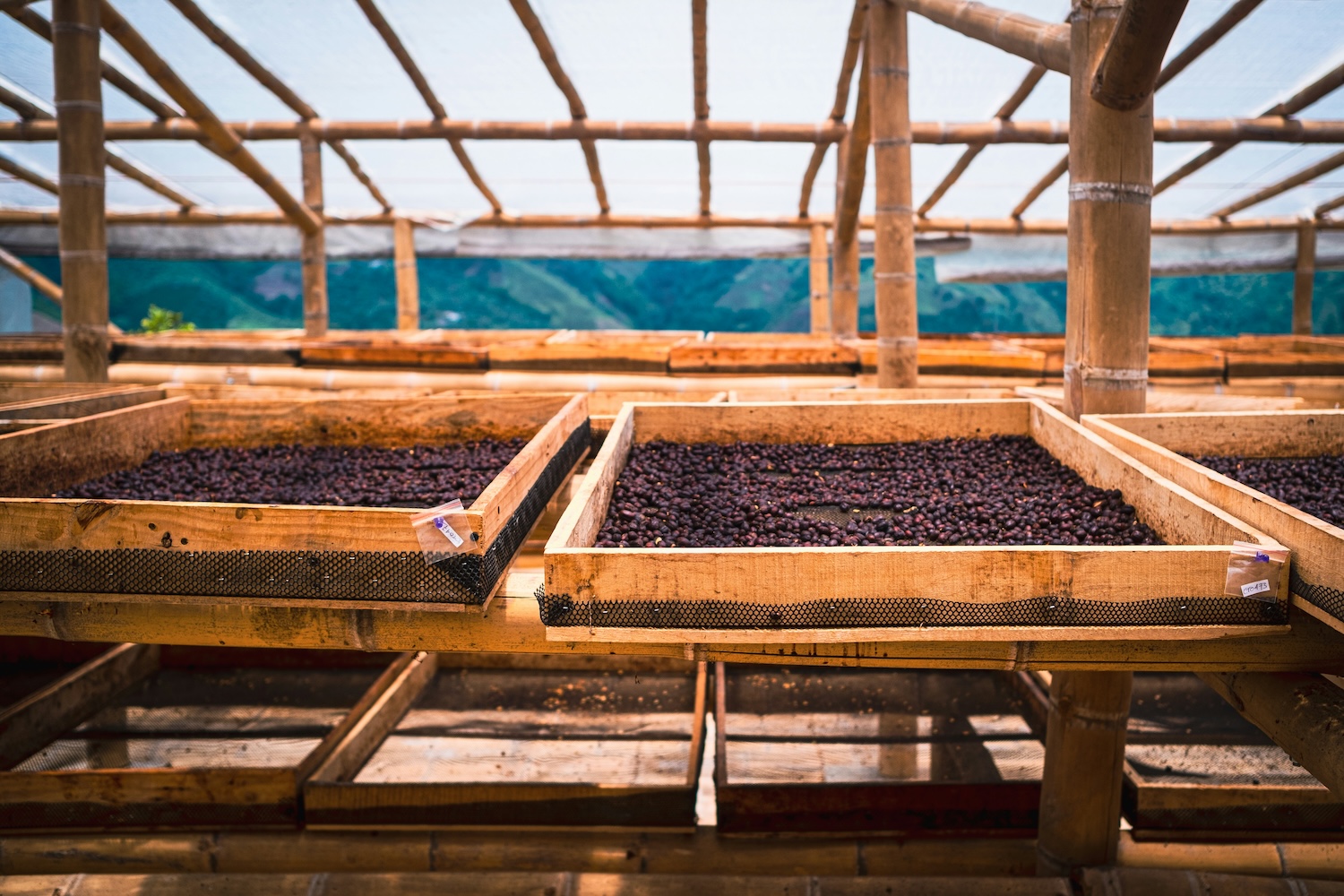
- Natural – the cherries are dried whole, giving the coffee a fruity, sweet flavor and full body
- Honey (honey process) – a combination of both methods; some of the pulp remains on the bean, creating a complex flavor
- Anaerobic (anaerobic fermentation) – an experimental method involving controlled fermentation without oxygen, creating unique, often very fruity flavors
Classic coffee primarily uses the standard washed process without further innovations. The goal is consistency, not experimentation.
5. Flavor Profile
This is perhaps the biggest difference you’ll notice when tasting. Specialty coffee has a complex flavor profile with nuances reminiscent of various fruits (strawberries, citrus, black currants), flowers (jasmine, lavender), chocolate, nuts, or even spices.
Every coffee is unique—Ethiopian coffee from the Yirgacheffe region may taste like Earl Grey tea with bergamot, while Brazilian coffee from the Cerrado region is reminiscent of pralines and caramel. These flavors are not artificially added; they are naturally present in the coffee beans and depend on the variety, soil, climate, and processing method.
Classic coffee focuses on consistency—you want your morning espresso to taste the same every day. The flavor is usually one-dimensional, bitter with notes of roasted nuts, without any distinct nuances.
Comparison Overview
Quality rating:
- Specialty coffee: 80–100 points according to the SCA
- Classic coffee: Below 80 points or unrated
Origin:
- Specialty coffee: Specific farm, region, plot, often with the farmer’s name
- Regular coffee: General country designation or simply "Arabica"
Freshness:
- Specialty coffee: 2–4 weeks after roasting, best consumed within 2 months
- Standard coffee: Several months to years; roasting date often missing
Harvest method:
- Specialty coffee: Hand-picked only ripe beans, often in multiple passes
- Regular coffee: Machine-harvested all at once, mixed ripeness
Price range per kilogram:
- Specialty coffee: 400–1,200 CZK (exceptional micro-lots even more)
- Standard coffee: 150–350 CZK
Typical flavor:
- Specialty coffee: Complex, multi-layered, fruity, floral, chocolatey
- Standard coffee: Standard, bitter, nutty, one-dimensional
Is specialty coffee worth the higher price?
That’s a question every coffee lover asks themselves. Specialty coffee usually costs 2–3 times more than regular supermarket coffee. Is it really “worth it”?
What exactly are you paying more for?
- Quality – every bean has undergone strict inspection, no defects
- Freshness – the coffee is roasted to order, not stored for months in advance
- Farmers’ labor – fair compensation (often 2–3 times more than the market rate) and a sustainable approach
- The roaster’s craftsmanship – hand-roasting in small batches, a professional approach
- A unique experience – every coffee has its own story and unique flavor
If you drink coffee every day and care about quality and flavor, investing in specialty coffee makes sense. A single cup of specialty coffee will cost you 15–25 CZK when you make it at home—which is still significantly less than coffee at a café (80–120 CZK)—and you’ll get comparable or better quality.
Tip for getting started: You don’t have to switch to specialty coffee overnight. Try ordering a smaller amount (250 g) first and taste the difference. Many people never go back to regular coffee—the difference is simply too pronounced.
How can you recognize true specialty coffee?
Unfortunately, there are many coffees on the market that are labeled as “premium” or “specialty,” but in reality do not meet specialty coffee standards. How can you tell the difference?
Look for these indicators on the packaging:
- Roast date – must be listed, ideally no older than 4–6 weeks
- Specific farm or region – not just “Brazil,” but “Fazenda Santa Barbara, Minas Gerais”
- Altitude – higher altitude = higher-quality coffee (ideally 1,200–2,000 m above sea level)
- Processing method – washed, natural, honey, anaerobic
- Coffee variety – for example, Bourbon, Caturra, Geisha, SL28
- Tasting notes – descriptions of flavors such as strawberry, citrus, caramel, chocolate
- SCA score – if listed, it should be 80+
- Roaster name – small artisanal roasters, not large corporations
If the packaging does not include a roast date or only general information such as "100% Arabica from South America," it is likely not true specialty coffee. Transparency is key – quality roasters are not afraid to share details.
Specialty Coffee in the Czech Republic and Europe
The Czech specialty coffee market is growing rapidly. In recent years, dozens of high-quality roasters and coffee shops focused on specialty coffee have emerged. Czech roasters like Doubleshot, Coffee Source, Nordbeans, and Candycane are among the best in Europe and regularly win international awards.
Prague has become one of the centers of specialty coffee in Central Europe, with dozens of high-quality coffee shops. But you don’t have to live in Prague—specialty coffee is available online, and you can have it delivered anywhere.
At KAVI, we collaborate with the best European roasters from France, Finland, Sweden, Germany, and other countries. Every month, you’ll discover new flavors, carefully selected from the offerings of the most renowned roasters—ones you won’t typically find in Czech stores. We deliver freshly roasted coffee right to your door.
How to properly prepare specialty coffee?
Quality coffee deserves quality preparation. Here are a few tips on how to get the most out of your specialty coffee:
- Grind fresh – always grind the coffee just before brewing, not in advance
- Use high-quality water – coffee is 98% water, so its quality is crucial
- Follow the recommendations – every coffee has an optimal preparation method (espresso vs. filter)
- The right temperature – ideally 90–96°C; boiling water can scorch light-roast coffees
- Coffee-to-water ratio – typically 1:15 to 1:17 for filter coffee
- Experiment – every coffee is different; try different methods and find your ideal
For specialty coffee, the best methods are the V60, Chemex, Aeropress, or a high-quality espresso machine. A French press also works great. Automatic whole-bean coffee makers are a compromise, but still better than ground coffee.
The Most Common Myths About Specialty Coffee
Myth 1: "Specialty coffee is just for coffee snobs"
Reality: Anyone who drinks coffee will appreciate better taste and quality. You don’t have to be an expert to tell the difference.
Myth 2: "It’s just marketing; coffee is coffee"
Reality: The difference between specialty coffee and regular coffee is measurable and verifiable. SCA standards aren’t marketing—they’re rigorous evaluations.
Myth 3: "Light-roasted coffee is sour and under-roasted."
Reality: Light roasting preserves the coffee’s natural flavors. "Acidity" is actually freshness and vibrancy, similar to wine or fruit.
Myth 4: "I need expensive equipment"
Reality: A quality grinder and a French press or Aeropress are enough. You don’t need to invest tens of thousands in an espresso machine.
Conclusion: Investing in quality pays off
The difference between specialty and regular coffee isn’t just about price or marketing. It’s a difference in approach, quality, transparency, and ultimately, taste. Specialty coffee represents coffee as it should be—grown with care, fairly traded, freshly roasted, and prepared with respect for its quality.
If you enjoy coffee and want to experience it as a gastronomic delight similar to fine wine or chocolate, specialty coffee is for you. If you just need a caffeine fix and aren’t too concerned about the taste, regular coffee will suffice.
One thing is certain, though—once you taste truly high-quality specialty coffee, properly prepared from freshly roasted beans, you’ll know exactly what you’ve been missing all along. And there’s no going back.
Want to get started with specialty coffee? Try the KAVI coffee subscription and discover the best European roasters. New flavors every month, freshly roasted and delivered right to your door. Free shipping, cancel anytime.