
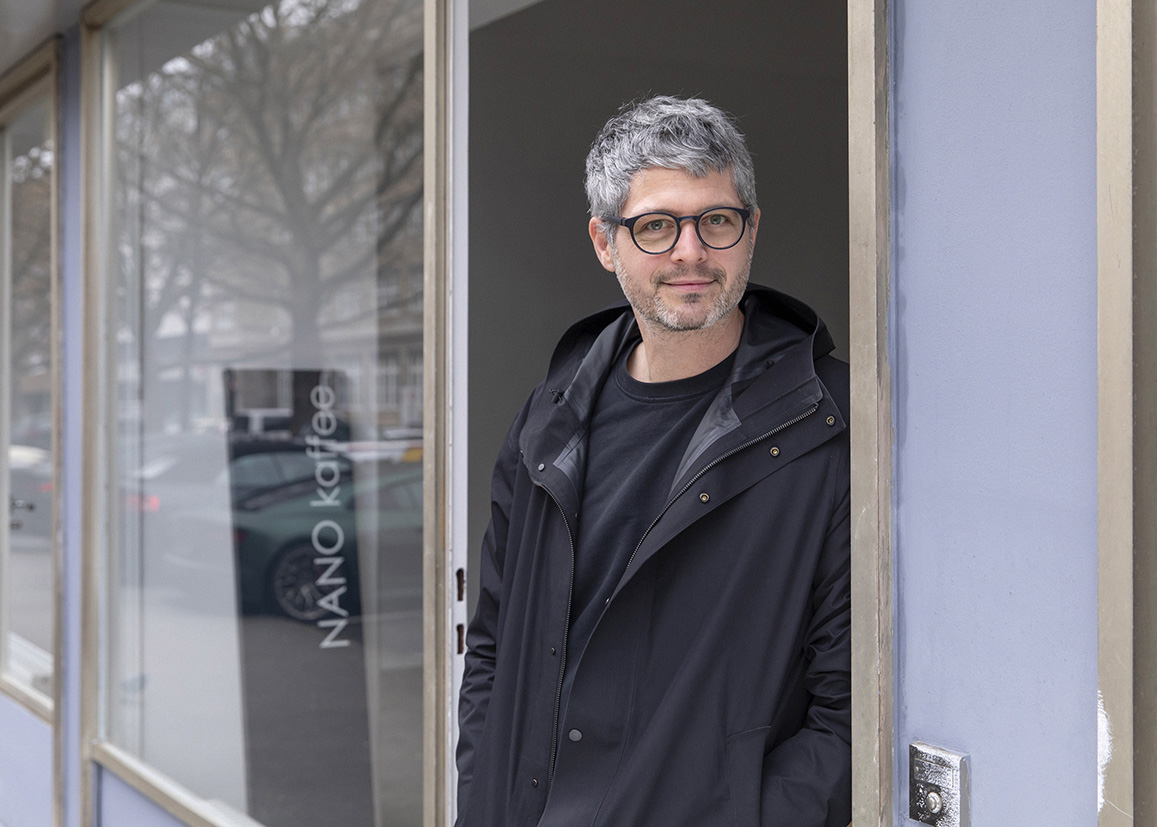
NANO KAFFEE is an independent Berlin-based specialty coffee roaster founded in 2014 by Ramin Massah with a simple yet radical idea—to run a business where environmental and social goals carry the same weight as financial figures. Organic coffee, transparent supply chains, and the motto “give coffee purpose” form the DNA of the brand, which is one of the most conscientiously operated roasteries in Berlin.
The story of NANO KAFFEE begins in an unconventional way. Ramin Massah worked as a carpenter for ten years—making furniture and theater sets—and his “adventure with coffee” began in 2009, when he opened his first coffee shop. He attended weekly cuppings, networked with roasters, and, excited by the rapid growth of the German coffee scene, eventually decided to focus exclusively on coffee. In September 2014, he opened NANO in Berlin’s Kreuzberg—an iconic coffee space that has become a neighborhood legend. Originally a specialty coffee shop, it later expanded to include roasting and moved to its current address at Charlottenstraße 1, where Massah installed a Loring roaster. Massah, who sees many parallels between woodworking and specialty coffee—both involve working with natural products as a craft—designed and built most of the café’s furnishings himself, with the help of a friend who is a blacksmith.
NANO KAFFEE’s approach to coffee is based on direct trade, traceability from farm to roastery, and fair prices above market levels. They roast exclusively organic coffee certified under the DE-ÖKO-070 standard, primarily 100% Arabica with a high cupping score and traceable origin. The lineup consists of single-origin lots from Brazil, Mexico, Colombia, Rwanda, and Indonesia—highlights include naturally processed Rwandan coffee from the Dukunde Kawa Musasa cooperative and a decaffeinated variety processed using the Mountain Water method from Chiapas, Mexico. Gentle roasting using Loring technology brings out the terroir and aromatic complexity without any overpowering bitterness.
But what makes NANO KAFFEE exceptional goes beyond the contents of the cup. Massah has committed the entire company to the principles of “Economy for the Common Good” and signed the EcoGood movement’s membership pledge. In practice, this means climate-neutral delivery throughout Germany, emission-free delivery in Berlin via cargo bikes, aluminum-free packaging, and operations powered by green energy. The roastery runs entirely on green electricity, uses recycled materials, banks with ethical institutions, and guarantees all employees permanent contracts with a guaranteed wage, paid vacation, and sick leave. The internal minimum wage is set significantly above the legal minimum—by 23% as of early 2026. For Ramin Massah, a simple principle applies: the ultimate goal of every action is the well-being of people and nature, not maximum profit.
Coffees from Nano Kaffee
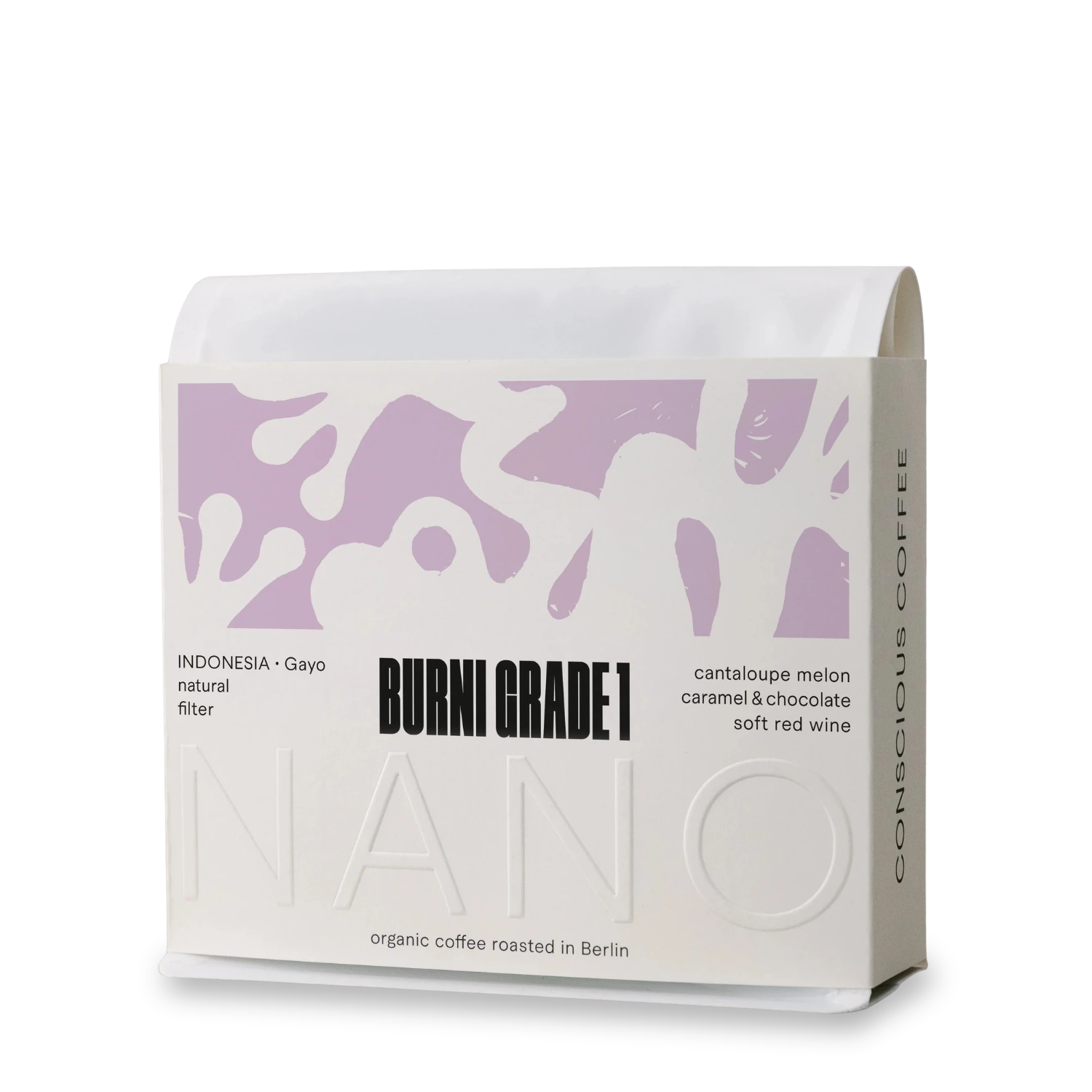
Burni Grade 1
Nano KaffeeOrganic Arabica from East Java, grown on the slopes of Indonesia’s most active volcano. Unusually for the region, it’s naturally processed—featuring notes of melon, caramel, and chocolate instead of the usual earthiness.
Burni Grade 1 comes from family farms in the neighboring villages of Curah Tatal and Kayumas in eastern Java, a short distance from the Ijen volcanic complex and Raung, Indonesia’s most active volcano. The farms here are very small—averaging half to two hectares per farm—so most of the harvest is done by hand, and individual growers do not have their own processing machinery. That is precisely why they have joined together to form the Koperasi Surya Abada Kayumas cooperative, which coordinates both harvesting and processing, thereby keeping a significant portion of the added value right in the local community. The cooperative also provides technical support to its members: with planting, sharing know-how, establishing infrastructure, and promoting biodiversity. Of the roughly 180 members, about 60 are women, and Chairwoman Siti continues to work toward increasing their representation. The volcanic soil around Ijen is loose, retains water well, and is rich in minerals and trace elements—the foundation for a full-bodied flavor. Coffee trees grow here in the shade of mature trees, which protects the cherries from direct sunlight while maintaining humidity and the diversity of the ecosystem; growers also cultivate cloves, jackfruit, and avocados among the coffee plants. But the most interesting aspect is the processing: in Java, where the mountains are typically too humid for natural processing, this coffee is unusually dry-processed—the cherries dry with the pulp still attached to the bean. The result is a different profile than that of the classic wet-hulled Mandheling. NANO KAFFEE, a roastery in Berlin’s Kreuzberg neighborhood, has drawn out a fruity note of cantaloupe melon wrapped in the more typical Javanese tones of caramel and chocolate, with a finish reminiscent of a soft red wine.
This coffee is only available in our monthly subscription. Join us and discover new flavors every month!
Choose Subscription
Dried blueberries, dark chocolate, rum barrel
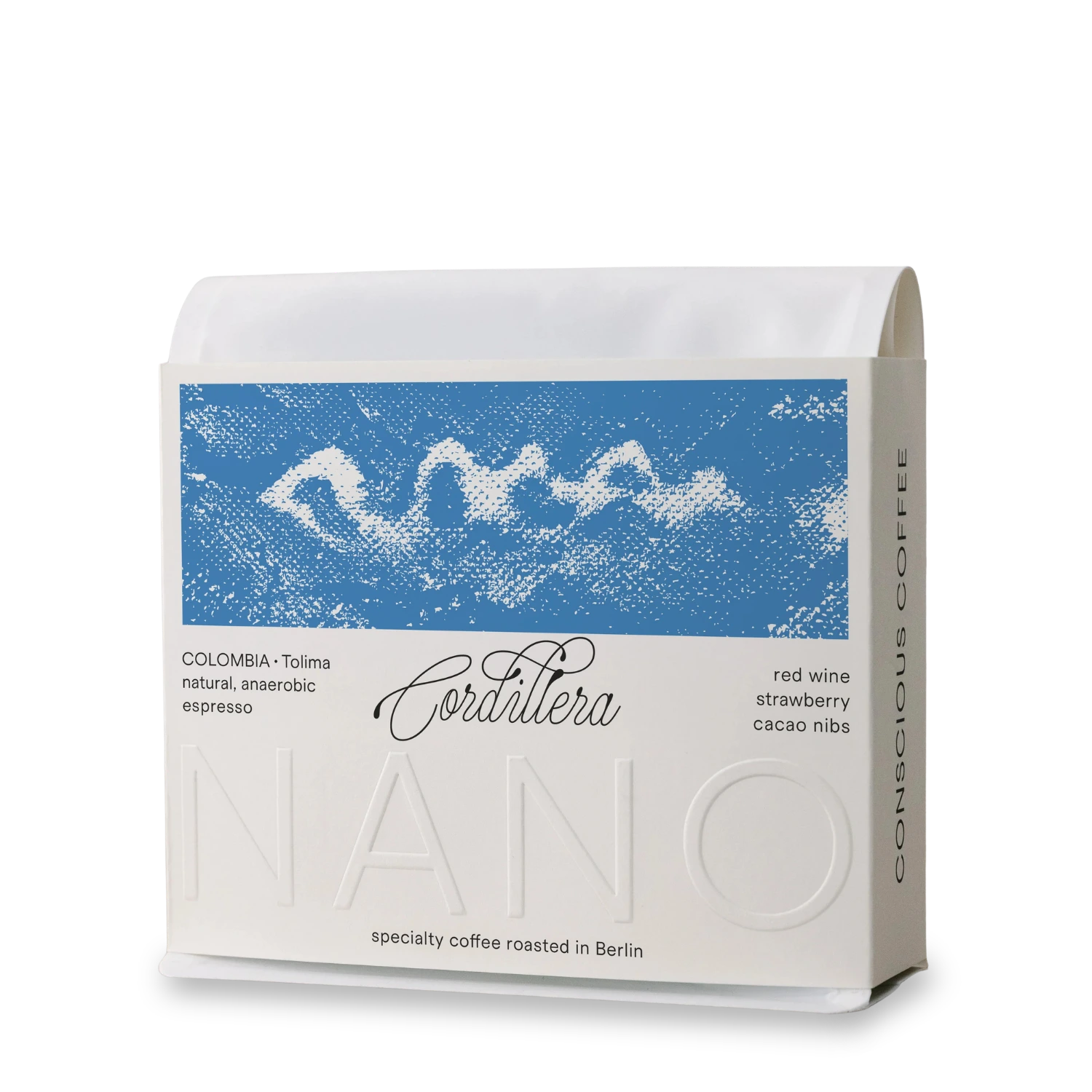
Red wine, strawberry, cacao nibs
Want to taste coffees from Nano Kaffee?
With our subscription, you can taste coffees from various European roasters every month. Fresh specialty coffee delivered right to your door.
Learn more about subscription →