
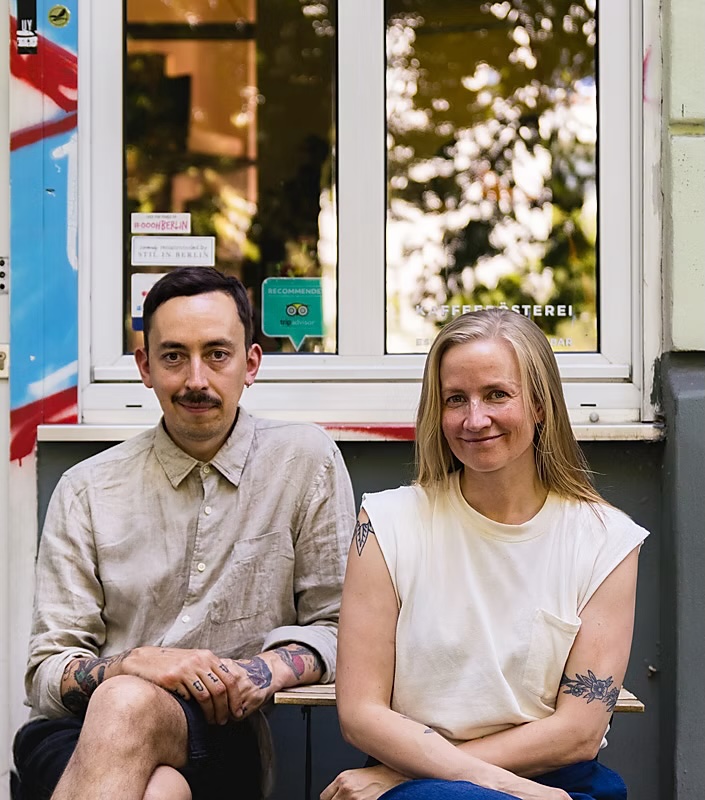
Populus Coffee is a family-run specialty coffee roastery founded in 2016 by Finnish husband-and-wife team Sari and Henrik Haavisto in Berlin’s Neukölln district. They focus on a light Nordic roast and on relationships with farmers they know personally. In ten years, what started as a small café by the canal has grown into a roastery that now operates in both Berlin and Shanghai.
The story of Populus Coffee didn’t begin in Berlin, but in Helsinki. Sari and Henrik grew up in Finland, where filter coffee is a natural part of daily life, and as they say themselves, it’s in their DNA. The turning point came in 2014. At the time, Henrik was still working as a journalist and traveled to Guatemala to write an essay for a book about coffee. The journey, which continued on to Honduras, showed him that specialty coffee is built primarily on people who work together as a team. He brought back his first long-term partnerships as well as the name: the Latin word “populus” means “people.” He then spent several months roasting at the Kaffa roastery in Osla, and he and Sari began planning their own business. However, they ran into trouble in Helsinki because people in the city center were afraid the aroma of roasting would bother them. So they chose Berlin and its open, international coffee scene.
Populus Coffee opened on the Maybachufer embankment along the Landwehrkanal, a short walk from the famous Turkish market. Their own roastery wasn’t ready yet, so the business started out as a multi-roaster. They served Haavisto coffee from other European roasters, and in the end, they saw this as more of an advantage, as it quickly opened doors for them in the industry. Within a year, they were roasting in the back room behind glass doors. Today, the café serves as a showcase. All the coffees are rotated at the bar using various brewing methods; the baristas take notes on how each coffee behaves and pass on their findings to wholesale customers. The coffee is served with pastries from their in-house bakers. Meanwhile, roasting has moved to Communal Coffee, the largest shared roasting space in Germany, which Haavisto founded together with Philipp Reichel and Janusch Munkwitz. In the Neukölln hall on Naumburger Straße, about a dozen roasters operate; green coffee importers and machine manufacturers meet here, and public cuppings, training sessions, and seminars are held.
Populus Coffee’s philosophy is simple: great coffee begins on the farm, and the roaster’s job is to find the best beans and bring out their natural flavor through roasting. That’s why the Haavists source their coffee as directly as possible, or through trusted partners who share their values. They source coffee from more than ten countries of origin and visit the farms at least twice a year. The result is light, sweet, bright, and clean flavor profiles—exactly what you’d expect from the Nordic school. For example, their selection includes coffees from Ethiopian farmer Khalid Shifa in the Jimma region; the roastery sells both his washed and natural versions side by side in a tasting box so you can taste the difference in the cup caused by the processing method. Also featured are the rare SL9 and Geisha varieties from small-scale growers in Incahuasi, Peru, and Capim Branco from the Andrade family in Brazil.
Coffees from Populus
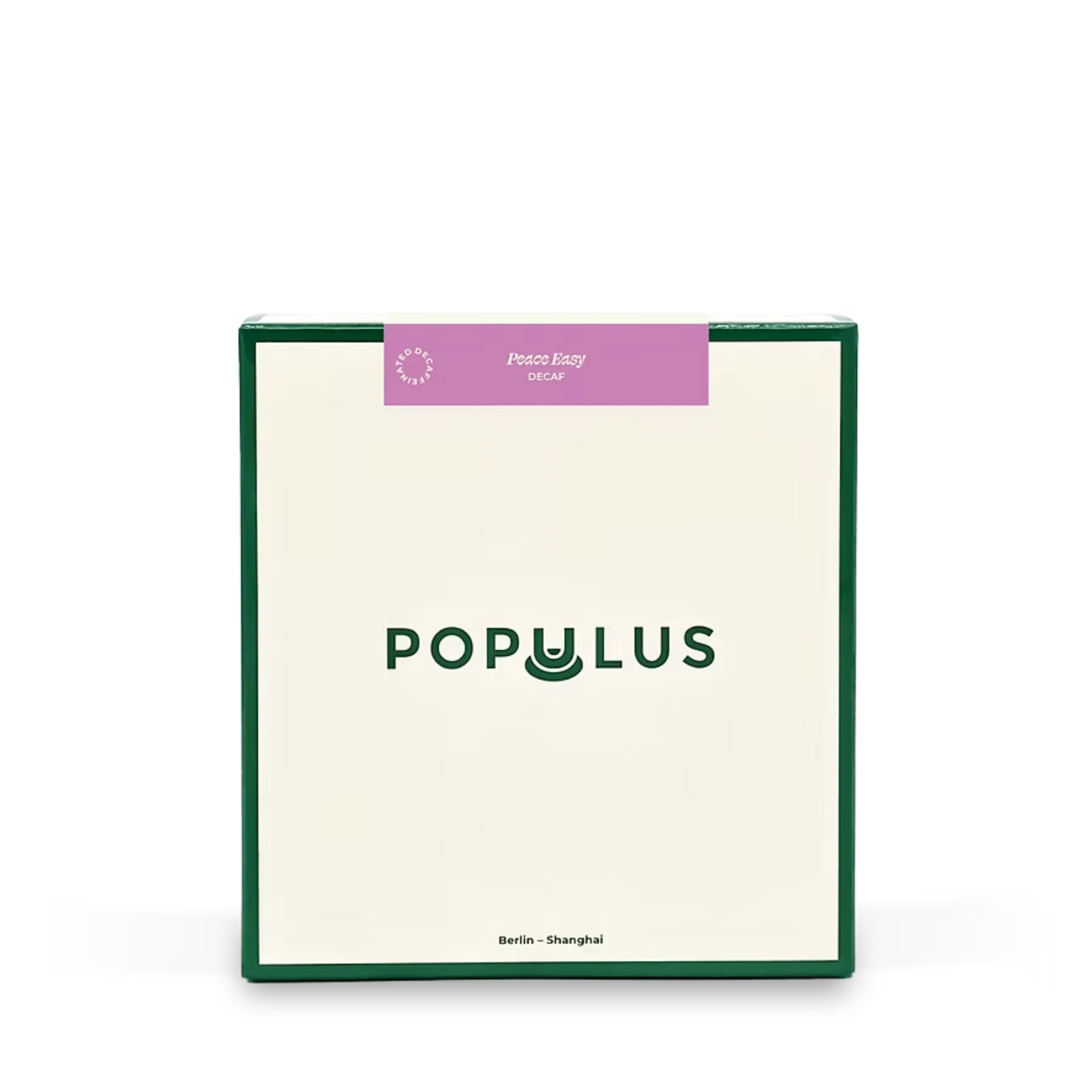
Cherry, molasses, marzipan, white grapes
Peace Easy
PopulusThe Berlin-based roastery Populus Coffee claims that its decaf Peace Easy is probably the best decaf you’ve ever tasted. This Colombian regional blend from Huila is meant to taste like real coffee—just without the shaky hands.
Peace Easy comes from the Huila department in southwestern Colombia, which Populus describes as the country’s most important coffee-growing region. It is not a micro-lot from a single farm. Rather, it is a regional blend from multiple growers in the area, which the roaster sources through its Colombian partner, Equation Coffee. Equation Coffee purchases the coffee while it is still in the fruit and processes it at its own facilities. The partnership has been in place since 2022, and Populus openly discloses the FOB purchase price: $7 per kilogram. The coffee is grown at an elevation of 1,600 to 1,800 meters. Caffeine is removed from the beans using the so-called cane method. The green beans are first gently steamed to open their pores, and then they are transferred to tanks containing water and ethyl acetate. The ethyl acetate is derived from molasses, a byproduct of sugar production. The ethyl acetate binds to the caffeine and, in about 24 hours, removes 98 to 99% of it from the beans. Because neither high pressure nor high temperature is used in this process, the coffee remains sweet and fresh and does not lose the flavor of its origin. Populus provides tasting notes for filter coffee, espresso, and cappuccino. In a filter brew, notes of cherry, molasses, marzipan, and white grapes are detectable, and the cup is round and sweet with a hint of apple acidity. The espresso offers notes of milk chocolate, almond butter, and fresh cherries, with a good texture and a creamy body. In a cappuccino, brown sugar and almonds come to the fore, complemented by the freshness of cherries.
This coffee is only available in our monthly subscription. Join us and discover new flavors every month!
Choose Subscription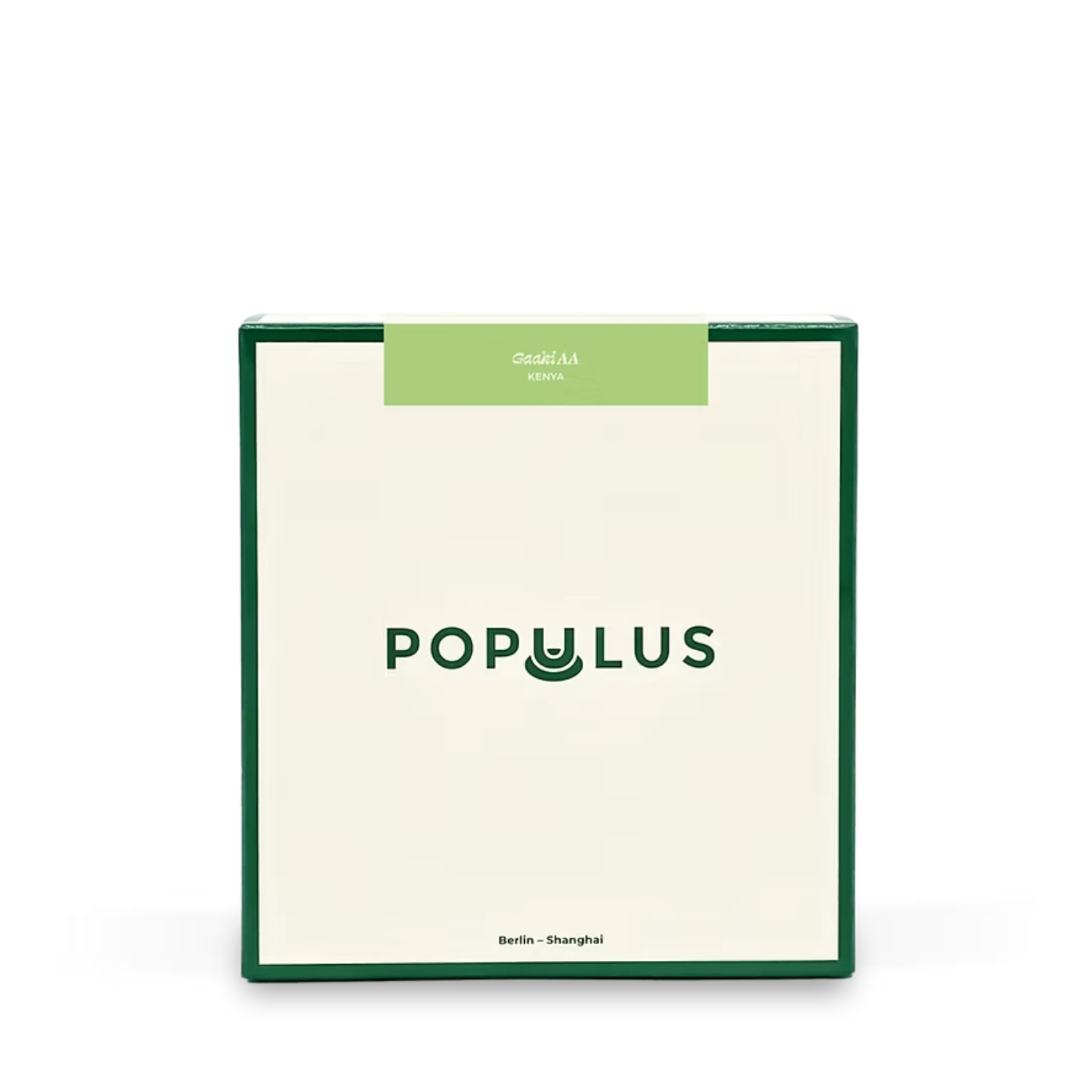
Black currant, gooseberry, fragrant flowers, lemongrass; lively acidity, juicy body
Gaaki AA
PopulusWashed Kenyan coffee from the Gaaki station in the Nyeri region, sourced by the Berlin-based roaster Populus Coffee through direct contacts in the region. In the cup: classic Kenyan blackcurrant notes, floral aromas, and a lively acidity.
The Gaaki station is located in the Nyeri highlands, in the Tetu district, and is operated by the Aguthi Farmers Co-operative Society. It processes the harvests of approximately 150 small-scale growers from the surrounding area. On their own, they could not afford their own processing facility, specialized training, or modern agronomic inputs; within the cooperative, they share these resources. Aguthi operates democratically: it is managed by an elected committee composed directly of local farmers. The coffee grows at an altitude of 1,600 to 1,800 meters and is a Kenyan classic: the SL28 and SL34 varieties, processed using the washed method. The “AA” designation in the name refers to the largest beans in the Kenyan grading system. The link between the cooperative and the roastery was Phyllis Nganga, a prominent figure in the East African specialty coffee scene. Populus met her during a trip to Kenya in 2023. Phyllis trains cooperatives in harvesting, processing, and fermentation, and connects them directly with foreign roasters—including those in Northern Europe this season. The roastery has also announced a FOB price of $12 per kilo. In the cup, Gaaki delivers exactly what you’d expect from Kenya: a lively acidity, a juicy body, black currant, gooseberry, fragrant flowers, and lemongrass. As an espresso, it resembles a lemon candy with black currant and a syrupy texture. In a cappuccino, it softens into milky caramel with green grapes, honey, and a tartlet with wild berries.
This coffee is only available in our monthly subscription. Join us and discover new flavors every month!
Choose SubscriptionWant to taste coffees from Populus?
With our subscription, you can taste coffees from various European roasters every month. Fresh specialty coffee delivered right to your door.
Learn more about subscription →