Which country has the best coffee? Beginners and seasoned coffee drinkers both ask this question, and the answer is surprisingly personal. An Ethiopian coffee can taste like jasmine tea with lemon, a Kenyan one like blackcurrant juice and a Brazilian one like milk chocolate with nuts. Which of them is "the best" depends mostly on what you like. In this guide we go through the world's most important coffee countries, explain how their coffees taste and why, and help you find the one for you.
Quick answer: There is no single best country. If you like fruity and floral flavors, look for coffees from Ethiopia, Kenya or Rwanda. If you prefer balance, go for Colombia or Central America. And if you want chocolate, nuts and low acidity, choose Brazil or Peru. The rarest and most expensive coffees in the world come from Panama.
Why origin matters
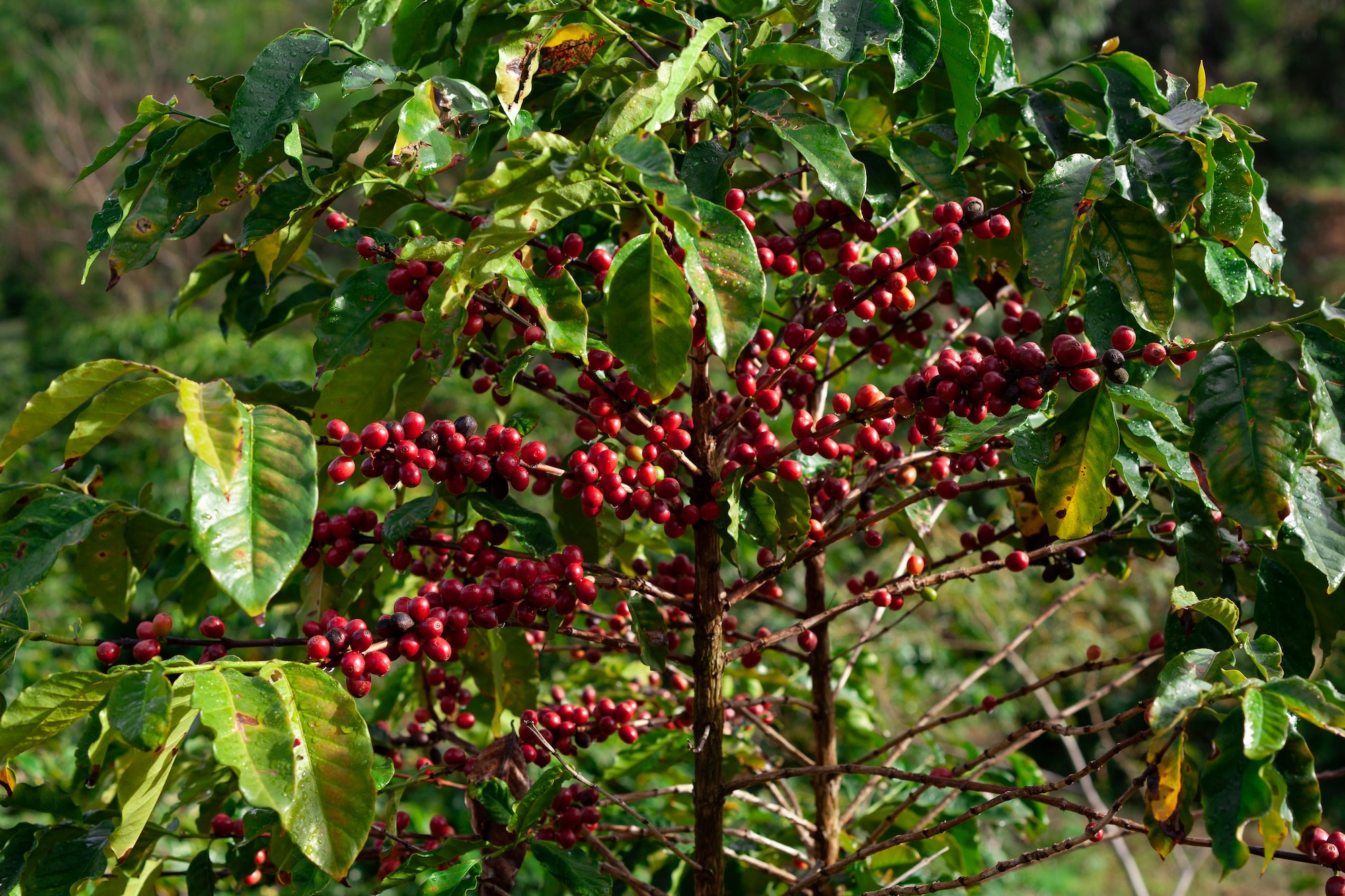
Coffee is the fruit of a shrub, and just as with wine or tea, the place where it grows shows up in its flavor. The technical term is terroir. The flavor of coffee from a given country depends mainly on:
- Altitude. At higher elevations, coffee cherries ripen more slowly, the beans are denser and the flavor more complex, with more pronounced acidity.
- Climate and soil. Temperature, rainfall and things like volcanic soil affect how sugars and acids develop in the bean.
- Varieties. Each country grows different coffee varieties: thousands of native ones in Ethiopia, the famous SL28 and SL34 in Kenya, the rare Gesha in Panama.
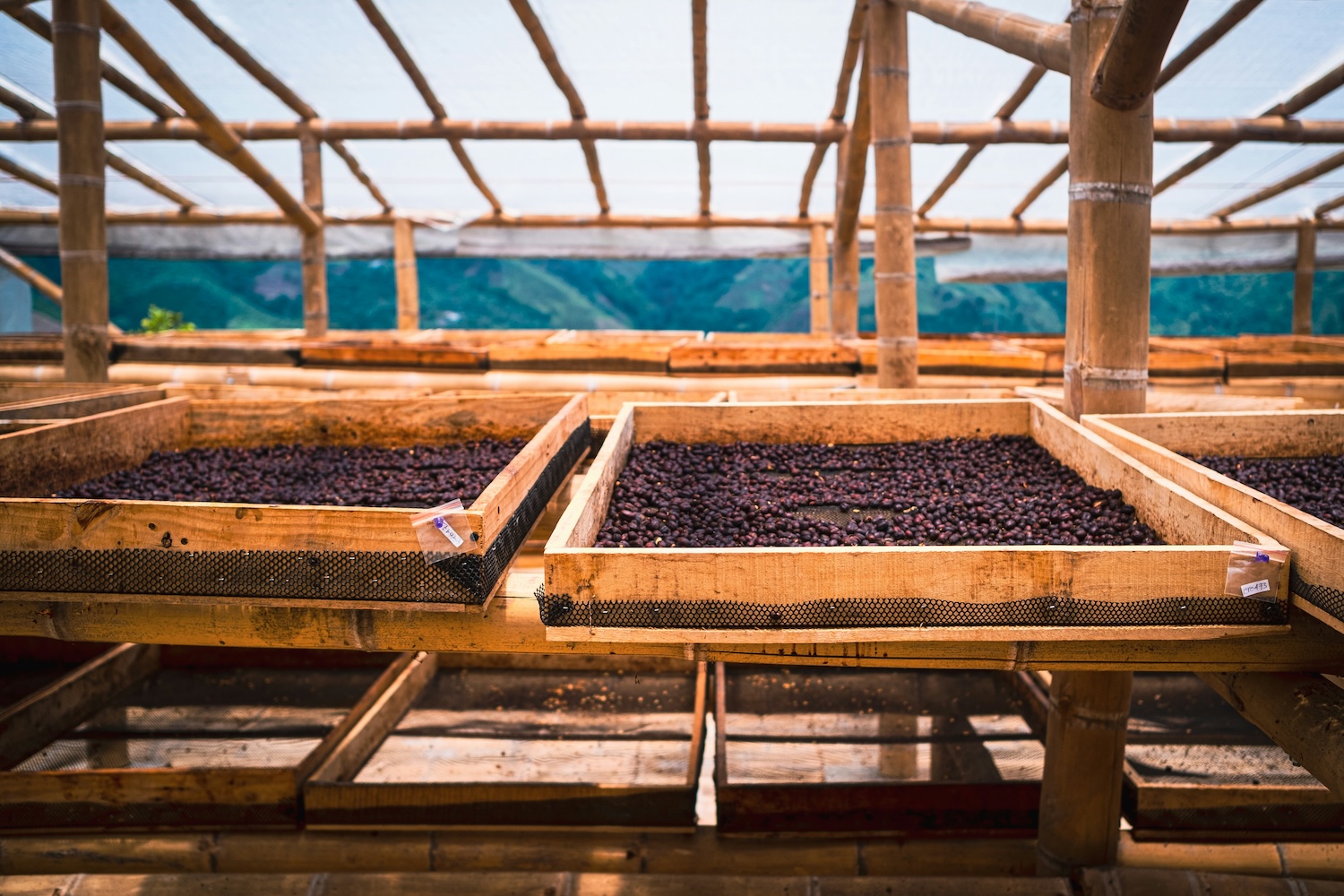
- Processing traditions. In some places the cherries are traditionally dried whole; elsewhere the fruit is removed and the beans are washed. Processing changes the flavor dramatically. Read more in Coffee Processing Methods: Washed, Natural and Honey.
So origin doesn't determine flavor one hundred percent, but it gives you a good idea of what to expect from a coffee.
The coffee belt: where coffee is grown
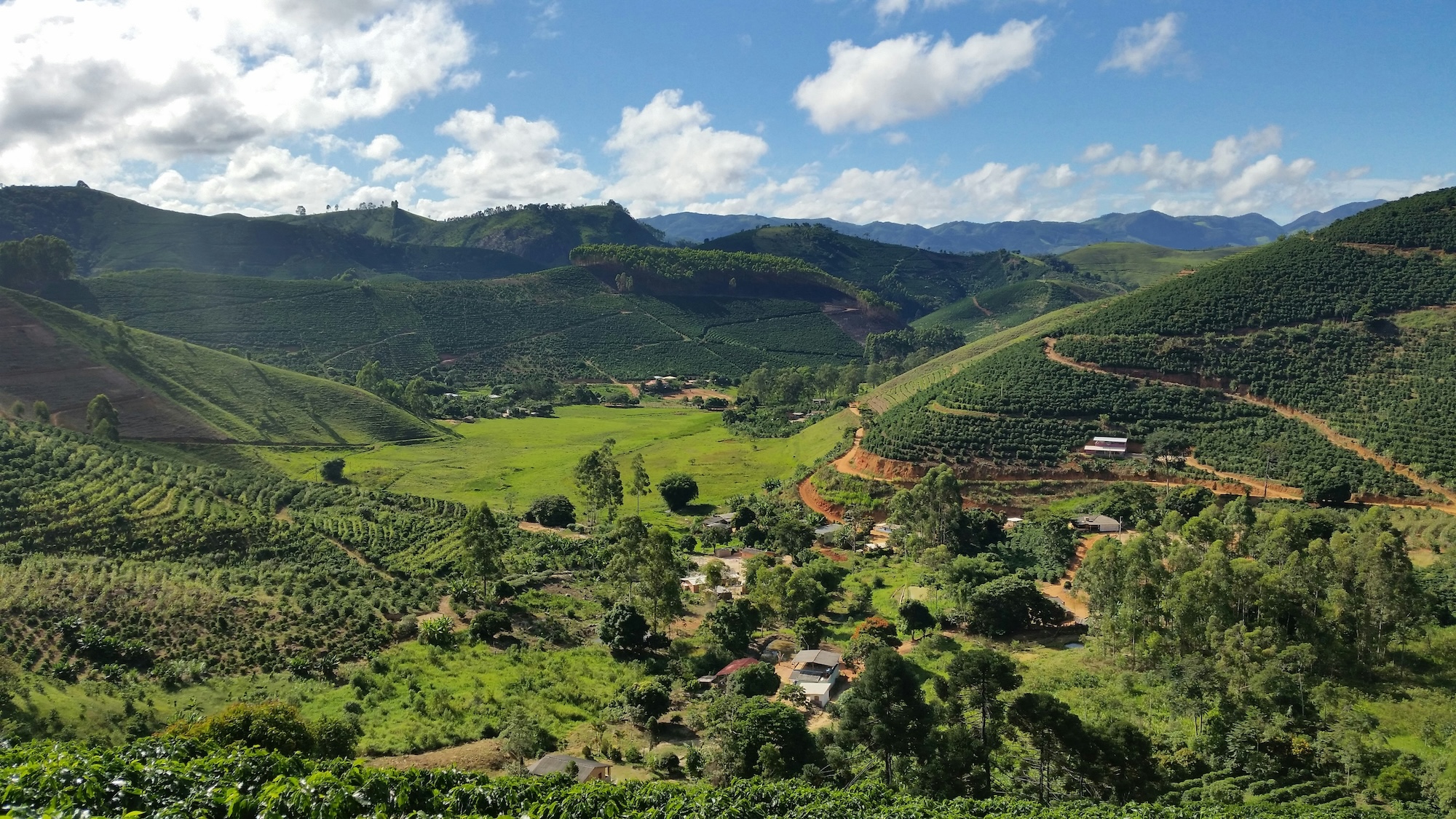
The coffee plant grows in the tropical band between the Tropic of Cancer and the Tropic of Capricorn, known as the coffee belt. More than seventy countries grow coffee today, across four main regions: Africa, South America, Central America and Asia. Brazil is the largest producer, followed by Vietnam, which grows mostly robusta. We cover the differences between arabica and robusta in Arabica vs. Robusta.
Africa: the cradle of coffee and fruity flavors
Ethiopia
Ethiopia is the birthplace of arabica and still has more native coffee varieties than anywhere else in the world: thousands of local types, often grouped together on bags as "heirloom". Coffee here is grown mostly by smallholder farmers and processed at washing stations, where they bring their cherries.
How it tastes: Washed Ethiopian coffees from regions such as Yirgacheffe, Gedeb or Guji recall jasmine, bergamot, lemon and black tea. Naturals, dried inside the whole cherry, taste of blueberries, strawberries and tropical fruit.
Who it's for: anyone who wants to experience how different specialty coffee can be from what they know. Ethiopia is ideal for filter coffee.
Kenya
Kenyan coffees are among the most distinctive in the world. They are grown mainly around Mount Kenya and are known for the SL28 and SL34 varieties, which a local laboratory selected and spread in the 1930s. Kenya grades coffee by bean size: the best-known grade, AA, means the largest beans, and AB slightly smaller ones.
How it tastes: juicy, with bright acidity and notes of blackcurrant, grapefruit, tomato or red wine. Excellent as filter coffee; with milk it can come across as too sharp.
Rwanda and Burundi
Over the past twenty years, these two small countries in the heart of Africa have become sought-after sources of specialty coffee. They grow mostly the Bourbon variety at high altitudes, and the coffee is processed at stations supplied by thousands of smallholder growers.
How it tastes: of red fruit, cranberries and black tea, with a delicate floral quality and pleasant sweetness. Rwandan naturals can be surprisingly fruity.
Africa and South America in one box
We pick the coffees for each KAVI box from three European roasters so that they differ from one another, which means you'll often taste an African coffee next to a South American one. Each comes with a postcard showing its origin and profile.
South America: sweetness and balance
Colombia
Colombia is one of the largest coffee producers in the world, and its varied mountain regions offer a huge range of flavors. The best-known regions are Huila, Nariño, Cauca, Tolima and Antioquia. Some regions harvest twice a year, so fresh Colombian coffee is available almost year-round. Colombian farmers are also among the boldest experimenters with fermentation.
How it tastes: balanced and sweet, with notes of caramel, red apple, citrus or cane sugar. Versatile for both espresso and filter.
Brazil
The world's largest coffee producer. Brazilian farms often sit at lower altitudes and on flat land where the harvest can be mechanized; the best-known regions are Sul de Minas, Cerrado Mineiro and Mogiana. Natural processing is typical, as is the so-called pulped natural method.
How it tastes: of chocolate, nuts, caramel and dried fruit, with low acidity and a full body. Brazil is the base of most espresso blends and works beautifully with milk.
Peru
Peru grows coffee high in the Andes, often on small farms and often organic. The best-known regions are Cajamarca, Amazonas and Cusco.
How it tastes: sweet and gentle, with notes of chocolate, nuts and yellow fruit. A good choice if you want specialty coffee without pronounced acidity.
Central America: chocolate, fruit and the rare Gesha
Guatemala
Guatemalan coffee grows on the slopes of volcanoes as well as in non-volcanic mountains. The Antigua region is known for its volcanic soil, while Huehuetenango is one of the highest growing regions in Central America.
How it tastes: of dark chocolate, citrus, spice and nuts, with a full body. Excellent for espresso.
Costa Rica
Costa Rica is known for its micro-mills, small processing facilities that give farmers control over how their own coffee is processed. This is where the honey method took off, in which part of the sticky fruit stays on the bean while it dries. The best-known regions are Tarrazú and West Valley.
How it tastes: clean and sweet, with notes of honey, stone fruit and citrus.
Honduras, El Salvador and Nicaragua
Honduras is the largest coffee producer in Central America, and the quality of its coffee has risen sharply in recent years. El Salvador is home to the Pacamara variety, with its giant beans and bold flavor. Coffees from these countries tend to be sweet, with notes of caramel, chocolate and fruit, and suit both espresso and filter.
Panama
Panama produces relatively little coffee, but it is the source of the most expensive coffees in the world. That is down to the Gesha (Geisha) variety, which reaches exceptional quality in the Boquete region and sells at auction for thousands of dollars per kilogram. We write more about it in Coffee Varieties: Gesha, Bourbon, SL28 and More.
How it tastes: Panamanian Gesha is floral, with notes of jasmine, bergamot, peach and tea. Other Panamanian coffees tend to be sweet and balanced.
Asia and the Arabian Peninsula: earthiness and history
Indonesia
The Indonesian islands of Sumatra, Java, Sulawesi and Bali produce coffees with an unmistakable character. Sumatra uses a local processing method called giling basah (wet hulling), in which the beans are hulled while still moist. The result is coffee with a full body, low acidity and earthy, herbal and spicy notes.
Who it's for: lovers of full, heavy coffees. If you're after fruit, you'll probably be disappointed.
Yemen
Yemen is where coffee spread out into the world, through the port of Mocha, which gave its name to the moka pot and to the drink. Yemeni coffees are grown on mountain terraces and dried in the whole cherry, and because of the tough growing conditions they are among the rarest and most expensive.
How it tastes: winey, with notes of dried fruit, cocoa and spice.
India and China
India grows coffee in the shade of trees in the south of the country and is famous for Monsooned Malabar, which is left to "age" in the humid monsoon winds. China's Yunnan province, meanwhile, is a fast-growing region that is starting to produce interesting specialty coffees.
At a glance: which country for which flavor
- Floral and tea-like flavors: Ethiopia (washed), Panama (Gesha)
- Juicy fruit and bright acidity: Kenya, Rwanda, Burundi
- Berries and tropical fruit: Ethiopia (natural), natural coffees from Colombia
- Balance and sweetness: Colombia, Costa Rica, Honduras
- Chocolate and nuts: Brazil, Peru, Guatemala
- Full body and earthiness: Indonesia (Sumatra)
- With milk: Brazil, Colombia, Guatemala
- For filter: Ethiopia, Kenya, Rwanda
Choose your coffee by country
For every coffee in the KAVI shop you'll find the country and region of origin and the tasting notes, and for most of them also the variety and processing. That makes it easy to find an Ethiopian for filter or a Colombian for milk drinks.
Is it all about the country? Not quite
Two coffees from the same country can taste completely different. Besides origin, these also matter:
- processing: a natural Ethiopian coffee is nothing like a washed one from the neighboring station,
- variety: a Gesha from Colombia can taste more like Panama than a typical Colombian,
- roast: a light roast preserves the flavors of origin, a dark roast covers them up. More in Light vs. Dark Roast,
- brewing: the same coffee tastes one way as espresso and another way from a pour-over.
That's why it's best to treat origin as a first pointer, not a final verdict.
How to find "your" coffee country
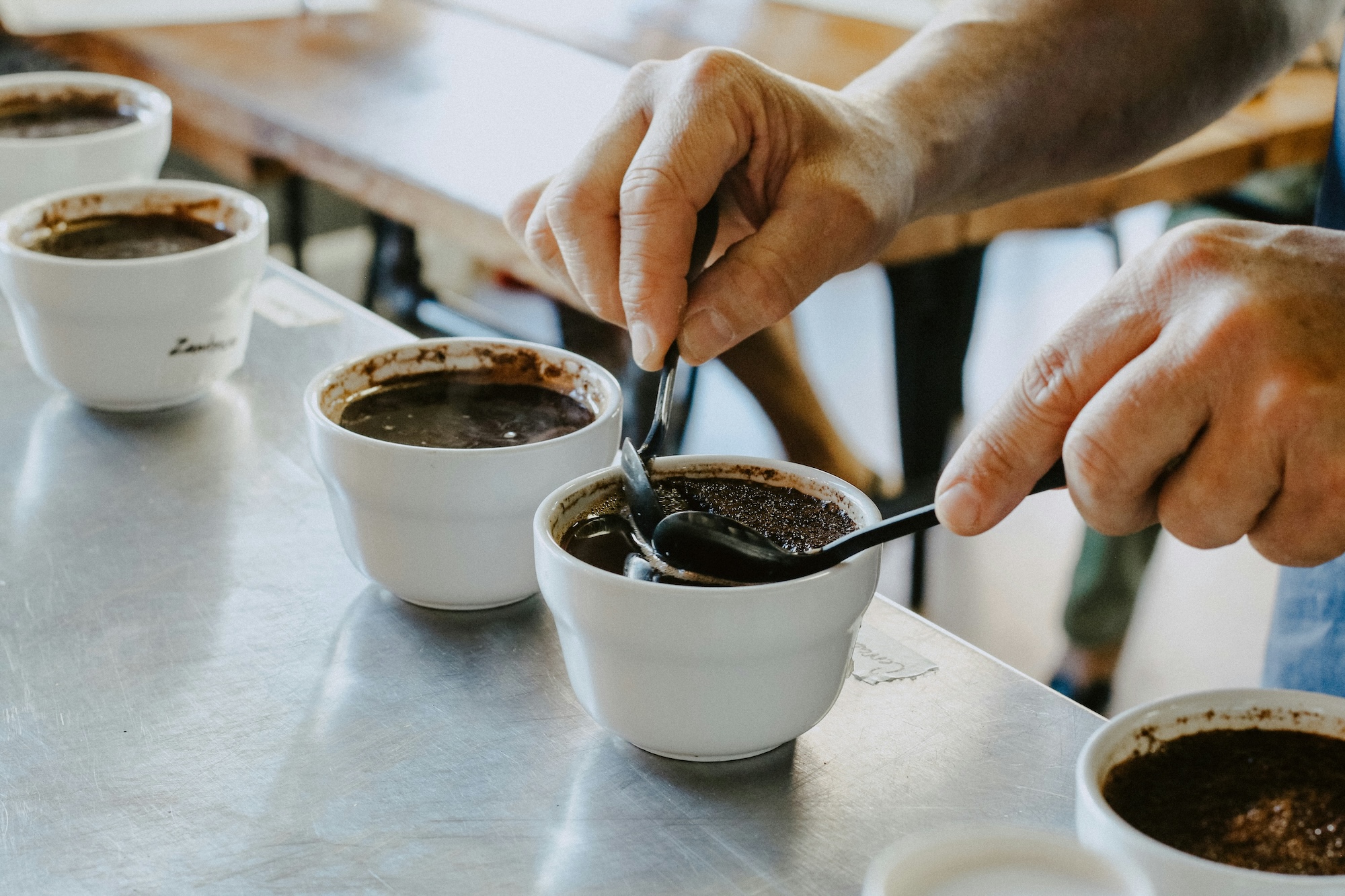
The quickest way is to taste coffees from different countries side by side. Drink an Ethiopian and a Brazilian coffee one after the other and the difference will surprise you more than any description could. You'll find a step-by-step guide to doing it like the professionals in How to Taste Coffee at Home.
That is exactly the idea behind the KAVI coffee subscription. Every month we pick coffees from three European roasters so that the box offers a range of flavors from different corners of the world, say a washed Ethiopian, a natural Rwandan and a sweet Colombian in one box. You can see what's in the box right now on the Coffee of the Month page.
Frequently asked questions
Which country produces the most coffee?
Brazil, which grows roughly a third of the world's coffee. Vietnam is second, mostly with robusta. Other major producers include Colombia, Indonesia and Ethiopia.
Is Ethiopian coffee sour?
Ethiopian coffees have a fresh, fruity acidity, but most people experience it as juiciness rather than unpleasant sourness. If you don't like acidity, try a natural Ethiopian, which is sweeter, or go for Brazil. More in Why "Sour" Coffee Doesn't Have to Scare You.
Where does the most expensive coffee in the world come from?
Panamanian Gesha sets the record prices at auction. A kilogram of the very best has sold for tens of thousands of dollars at the Best of Panama auction.
Which country is best for espresso?
For a classic sweet espresso, coffees from Brazil, Colombia, Guatemala or Honduras are the most common choice. Modern roasters also make excellent espressos from Ethiopia or Kenya, though; just expect a fruitier, brighter result.
Which coffee is best for beginners?
Colombia or Brazil: they are sweet and balanced and taste familiar, yet they show how much better specialty coffee is than the regular kind. Once you're used to them, add an Ethiopian and see how far coffee can go.
Want to taste coffees from around the world? With a KAVI coffee subscription, coffees from different countries arrive every month from three European roasters. Each comes with a postcard showing its origin and profile.