How long to rest coffee after roasting before it tastes its best? Longer than most people think. The popular idea that the best coffee is the one roasted yesterday works for bread, not for coffee. Freshly roasted beans are full of carbon dioxide and their flavors are still settling, so the coffee tends to taste sharp and unbalanced and is hard to brew well. This process is called degassing. In this article we explain what happens to coffee after roasting, how long to rest it for filter and for espresso, when light-roasted specialty coffee is at its peak and how long it stays there.
Quick answer: Rest filter coffee for about 1–2 weeks after roasting and espresso coffee for 2–4 weeks. Light-roasted specialty coffee is usually at its peak roughly 3–8 weeks after roasting, and in an unopened valve bag it keeps its flavor well for two to three months. So coffee roasted a month ago isn't old – with a light roast, it is often at its very best.
What happens to coffee after roasting
Hundreds of chemical reactions take place inside the bean during roasting. Sugars caramelize and aromatic compounds form, and as a by-product so does a large amount of carbon dioxide (CO₂). The gas stays trapped in the bean's cells and is gradually released after roasting: fastest in the first few days, then more and more slowly – and with dense, light-roasted beans, for several weeks.
That is why bags of specialty coffee have a one-way valve: gas can escape from the bag, but air can't get in. Without the valve, fresh coffee would inflate the bag or even burst it. If you gently squeeze a bag of coffee, you can smell it through the valve. That is the escaping CO₂ carrying aromatic compounds with it.
Why freshly roasted coffee doesn't taste its best
The carbon dioxide in the bean gets in the way of brewing. When you pour water over coffee that is too fresh, the gas escapes violently and stops the water from reaching all the coffee particles evenly. The result is uneven extraction: some of the coffee is under-extracted, some over-extracted.
Here is how you can tell in the cup:
- With filter coffee: the coffee "bubbles up" wildly when you pour and forms a big foamy dome, the water flows through unevenly and the taste is flat, astringent or dull.
- With espresso: the shot runs unevenly, the crema is excessively tall, pale and bubbly and quickly collapses. The taste is often sharply sour, salty or "harsh", and every shot tastes different.
On top of that, the flavors themselves are still settling after roasting. In the first few days coffee often tastes green and unbalanced; sweetness, body and complexity only develop with time. With light roasts this takes longer than you might expect.
How many days to rest coffee
The exact time depends on the coffee, the roast level and the brewing method. These figures apply to light to medium roasted specialty coffee; treat them as a starting point:
Filter coffee: 1–2 weeks
Filter coffee is brewed without pressure and with longer contact between coffee and water, so a bit of leftover CO₂ doesn't matter as much. You can drink it after a few days, but most light-roasted filter coffees really open up after one to two weeks. Coffees from dense high-altitude beans, such as those from Kenya or Ethiopia, often show their best only after three or four weeks.
Before brewing, don't forget the bloom: first pour a small amount of water over the coffee (about twice the weight of the coffee) and let it "bloom" for 30–45 seconds. The gas escapes and the rest of the water then flows through evenly.
Espresso coffee: 2–4 weeks
Espresso is more sensitive to gas in the beans. Water is forced through the coffee at around nine bar in a matter of seconds, so every bubble of CO₂ disrupts extraction. Rest espresso coffees for at least two weeks. For light espresso roasts, many roasters and baristas recommend three to four weeks or more – only then does the shot run steadily and taste sweet and balanced.
Bean-to-cup machine: 2–3 weeks
Bean-to-cup machines make espresso, so a similar rule applies. Coffee that is too fresh can also cause problems with an even flow. If coffee from your machine tastes harsh or unbalanced, give it a few more days.
Moka pot, French press and AeroPress: 1–3 weeks
These methods sit somewhere between filter and espresso. The French press and AeroPress are forgiving and cope well with coffee that is around a week old; with a moka pot it pays to wait longer, because the coffee is brewed under mild pressure.
Do you brew both espresso and filter?
In a KAVI subscription you choose an Espresso, Filter or Mix box, which gives you coffees for both. You can change the coffee type in your account at any time.
What the resting time depends on
- Roast level. Dark-roasted beans are more porous, CO₂ escapes from them faster and they are ready sooner – but they also go stale faster. Light-roasted beans are denser and release gas more slowly, so they need a longer rest and keep longer.
- Bean density. Coffees from high altitudes have denser beans and degas more slowly.
- Processing. Natural and fermented coffees can behave differently from washed ones, although the differences tend to be smaller than with roast level.
- Temperature and packaging. Degassing is faster in warm conditions. An unopened valve bag slows down oxidation, so the coffee "matures" undisturbed.
How roast level affects flavor is covered in our article Light vs. Dark Roast Coffee.
Why the recommended resting time keeps getting longer
Only a few years ago the rule was that coffee is best within two weeks of roasting. But that rule comes from a time when medium to dark espresso roasts dominated. Specialty coffee today is roasted much lighter, and light-roasted beans behave differently: they degas more slowly, their flavors take longer to develop and they stale more slowly.
That is why many specialty roasters now recommend leaving coffee for several weeks before opening it, and plenty of cafés brew espresso from coffee rested for three to five weeks. It is sometimes summed up as "rest is the new fresh". Freshness doesn't mean the shortest possible time since roasting; it means coffee that hasn't lost its aroma yet – and with a light roast in good packaging, that takes months, not days.
When coffee is at its best and when it's stale
You can think of the life of a light-roasted specialty coffee as a curve with four phases:
- Too fresh (up to about 1 week): lots of CO₂, unbalanced flavor, hard to brew.
- Maturing (roughly 1–3 weeks): filter already tastes good, espresso is still settling. The flavors round out and sweetness builds.
- Peak (roughly 3–8 weeks): the flavors are developed, sweetness and acidity are in balance, and the coffee brews well for both filter and espresso.
- Gradual decline (after roughly 2–3 months): the most delicate aromas slowly fade and the flavor flattens. The coffee is still drinkable, just less expressive.
The boundaries aren't sharp and they vary from coffee to coffee. Dark roasts go through the whole curve faster, peak earlier and go stale earlier. But light-roasted specialty coffee in an unopened valve bag keeps its flavor well for about two to three months from roasting. Once you open the bag, it's best to finish it within two to four weeks.
How to tell if coffee is too fresh or already stale
Coffee that is too fresh:
- forms a big dome and bubbles up wildly when you pour filter water over it,
- the espresso has an excessively tall, bubbly crema,
- the taste is sharp, unbalanced and varies from cup to cup,
- the bag is noticeably puffed up.
Stale coffee:
- barely bubbles even right after grinding,
- the espresso has a thin crema that disappears quickly,
- the taste is flat, lacking sweetness, papery or woody,
- you can hardly smell it when you open the bag.
Keep two things in mind. Gentler bubbling in coffee that is a few weeks old is not a sign of age, but a sign that the excess gas has escaped – which is exactly what resting is for. And dark-roasted coffees have an oily surface from the start. With light-roasted specialty coffee, though, an oily sheen on the beans is usually a sign that the coffee really is old.
Why look for the roast date on the bag
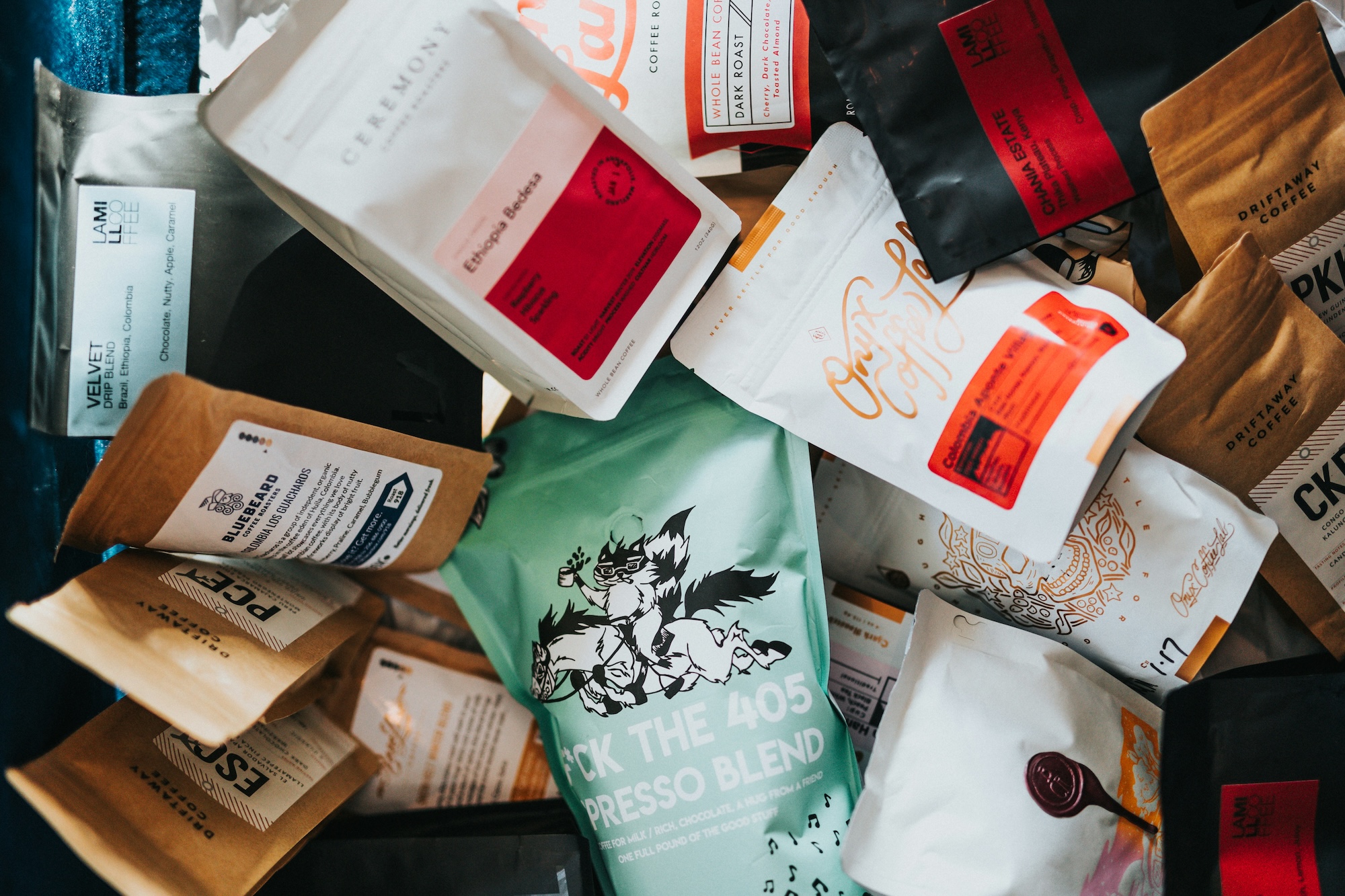
The best-before date you'll find on supermarket coffee tells you little about freshness – it's usually set a year or two after production. For specialty coffee, the key information is the roast date. It isn't there so you can hunt for the freshest possible coffee, though. It tells you whether to open the coffee right away or give it more time. What else to look for on the bag is covered in our article How to Choose Coffee Beans.
A practical tip: if you get coffee roasted a few days ago, leave it in the unopened bag and finish your previous bag in the meantime. If a light roast was roasted three to six weeks ago, it's ready to go – for filter and for espresso.
Subscription coffee arrives well rested
We order the coffees for KAVI coffee boxes from European roasters well in advance, so they reach you roughly a month after roasting. That isn't a compromise, it's intentional: unlike coffee roasted a few days ago, you don't have to set anything aside and wait. The coffees arrive rested, just as light-roasted specialty coffee is coming into its best form, and they are ready for both filter and espresso.
We send every coffee in the roaster's original airtight valve bag, in which it ages only very slowly. So you can enjoy the whole box at your own pace before the next one arrives, and every coffee stays in good shape. Just open one bag at a time and keep the others sealed.
How to work with resting time in practice
Theory is one thing, morning reality is another. A few simple habits will help you drink every coffee at its best:
- Check the roast date as soon as you unpack. Set aside coffee roasted a few days ago and open the rested one first.
- Open filter coffee before espresso. If you have both from the same roasting week, start with the filter. The espresso can mature in the meantime.
- Don't keep too many bags open at once. An unopened valve bag protects coffee much better than an open one. Two open coffees is a sensible maximum.
- Note the days since roasting. When a coffee tastes exceptionally good, write down how many days after roasting it was. You'll soon learn when the coffees you like peak – and you may be surprised how late that is.
- Don't be afraid to adjust your grinder. As coffee releases less gas, the way it flows changes too. With espresso you'll probably notice it running faster after a few weeks – just grind a little finer and the taste comes back into balance.
- Split up large supplies. If you have more coffee than you'll drink in two months, freeze the rested bags in smaller portions and take them out gradually.
One more piece of advice: don't treat any numbers as dogma. One coffee will be great after a week, another will only open up after five. Taste, observe and let your palate guide you – more on tasting coffee mindfully in our article How to Taste Coffee at Home.
Resting is not storage
Resting after roasting and long-term storage are two different things. While coffee "matures" in the first weeks, later on you are simply protecting it from going stale. Store coffee in its original bag or an airtight container, somewhere dry, dark and at room temperature. Don't put it in the fridge – it absorbs odors and moisture. If you have more coffee than you can drink in time, you can freeze it in small portions. You'll find a detailed guide in our article How to Store Coffee to Keep It Fresh.
Frequently asked questions
Can I drink coffee the day after roasting?
You can, it won't do you any harm. It just probably won't taste as good as it will in a few weeks – it will be sharper, less sweet and harder to brew, especially as espresso.
Is coffee still fresh a month after roasting?
Yes. Light-roasted specialty coffee in an unopened valve bag is usually at its peak a month after roasting and keeps its flavor well for about two to three months from roasting. Only dark roasts and coffee in an opened bag go stale faster.
What does the roast date on the bag mean?
The day the coffee was roasted. It tells you whether the coffee is ready to drink or whether you should give it more time. For specialty coffee, it's the most important information on the bag.
Why does a coffee bag have a valve?
So that the carbon dioxide released by coffee after roasting can escape from the bag without letting air in. Without the valve, the bag would puff up and the coffee would go stale faster.
Is it worth freezing coffee?
Yes, if you won't finish it within about two to three months of roasting. Freeze it in small, well-sealed portions and let it come to room temperature before opening, so that moisture doesn't condense on the beans. Don't refreeze coffee once it has thawed.
Why does espresso from fresh coffee taste sour?
Carbon dioxide prevents even extraction and the coffee is under-extracted – and under-extracted coffee tastes sour and salty. Give the coffee another week or two, or grind it a little finer.
Want coffee at home that's always at its best? With a KAVI coffee subscription, specialty coffee from European roasters arrives every month, rested and ready to brew, at a Packeta pickup point or parcel locker of your choice. Pause or cancel any time.