How do you know how to choose coffee beans when you're standing in front of a shelf or browsing an online shop and every bag promises "the best taste"? The good news is that you can spot quality coffee from a few details on the bag. The bad news is that most people look at the wrong ones – an "intensity 8/10" rating or a "100% Arabica" label. In this guide, we explain how to choose coffee for your brewer and your taste, what the information on a specialty coffee bag means, and what not to fall for.
Quick answer: Buy whole bean coffee with a roast date on the bag (a light roast is at its best roughly 3–8 weeks after roasting), an origin down to the region or farm, and the processing method. For bean-to-cup and espresso machines, choose coffee roasted for espresso; for pour-over and French press, choose coffee roasted for filter. If you don't like acidity, look for flavor notes like chocolate, nuts and caramel – typical of coffee from Brazil or Colombia.
Why whole bean coffee
Coffee loses its aroma incredibly fast once it's ground. Within minutes, a large part of its most delicate aromas is gone, and after a few days ground coffee is a shadow of itself. Whole beans, on the other hand, hold their aroma for weeks. So if you want good coffee, buy beans and grind them just before brewing. We go into detail in our article Whole Bean vs. Ground Coffee: Freshness Decides.
Step 1: Choose by brewing method
The very first question isn't "which coffee is best" but "what will I brew it with." Roasters often roast the same coffee twice – once for espresso and once for filter.
- Bean-to-cup machine: espresso coffee, ideally medium to slightly darker roasted, with notes of chocolate and nuts. Very light coffees can taste sour from an automatic machine.
- Espresso machine: espresso coffee. You can also experiment with lighter, fruitier coffees if you have a good grinder.
- Moka pot: espresso coffee, or an all-purpose ("omni") roast.
- Pour-over (V60, Chemex), AeroPress: filter coffee – a lighter roast that brings out fruity and floral notes.
- French press: filter coffee or an omni roast.
We explain the differences between espresso and filter coffee in our article Espresso or Filter Coffee? The Difference in the Roast.
Step 2: Choose by taste
Specialty coffee covers a huge range of flavors. To start with, it's enough to tell apart two basic directions:
- Chocolatey, nutty and caramel coffees – low acidity, full body, a "familiar" coffee taste, only cleaner and sweeter. Typically Brazil, Peru, Guatemala or Honduras. Ideal with milk and for bean-to-cup machines.
- Fruity and floral coffees – bright acidity, lighter body, notes of berries, citrus, stone fruit or jasmine. Typically Ethiopia, Kenya or Rwanda. They shine most as filter coffee.
If you're looking for coffee that isn't sour, go for the first group. But don't be afraid to try the second – the acidity of specialty coffee is more like juicy fruit than vinegar. Read more in Why "Sour" Coffee Doesn't Have to Scare You. And to find out how coffees from different countries taste, see our guide Which Country Has the Best Coffee?
A box that matches your taste
With a KAVI subscription, you choose an Espresso, Filter or Mix box. Espresso coffees tend to be fuller and sweeter, filter coffees fruitier and brighter, and the Mix gives you both.
Step 3: Learn to read the bag
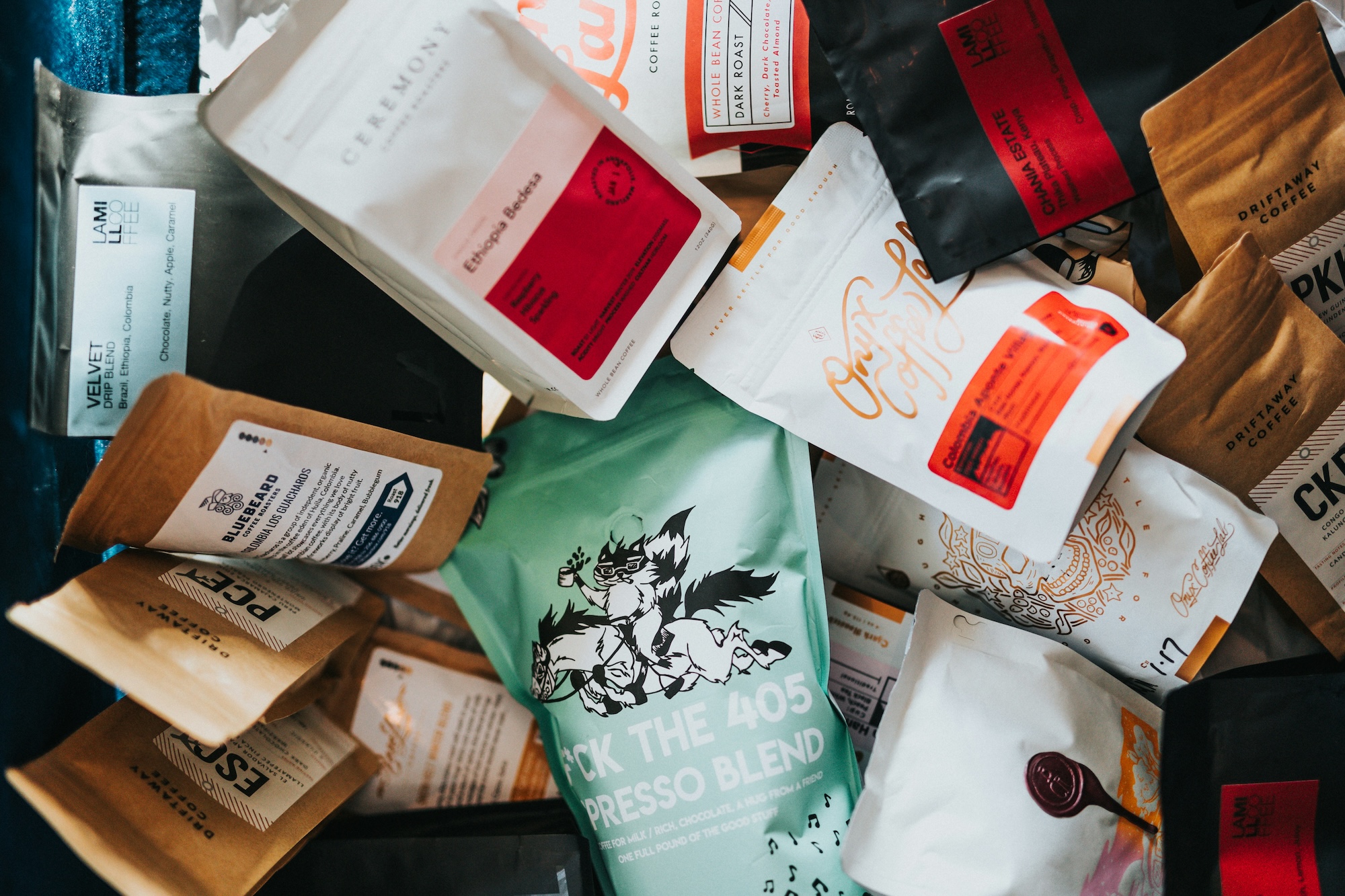
A specialty coffee bag is a small encyclopedia. Here's what each piece of information means and which ones matter most.
Roast date
The most important detail on the bag. After roasting, coffee first needs a rest – about one to two weeks for filter, two to four weeks for espresso – and a light roast then tastes best up to roughly two months from roasting. If the bag only shows a best-before date, you don't know how old the coffee is – and with supermarket coffee, it can be months. Read more in How Long to Rest Coffee After Roasting.
Country, region and farm
The more specific the origin, the better. "A blend of South American Arabicas" tells you almost nothing. "Colombia, Nariño, Genova, producer Jesús Cerón, washed" shows that the roaster knows exactly what it's buying and that the coffee is traceable. With African coffees, instead of a farm you'll often find the name of a washing station, where farmers from the surrounding area bring their coffee.
Altitude
Usually given in meters above sea level. At higher altitudes, coffee cherries ripen more slowly, the beans are denser and the flavor is more complex, often with more pronounced acidity. Specialty coffees are often grown at roughly 1,200 to 2,200 meters, though Brazilian coffees are commonly grown lower. So it isn't a hard rule – coffee from lower altitudes can be excellent too.
Variety
Just like wine grapes or apples, there are different coffee varieties – Bourbon, Typica, Caturra, Gesha, SL28 and hundreds more. Each has a different flavor potential. Ethiopian coffees are often labeled "heirloom," meaning a mix of local native varieties. We introduce the most interesting ones in our article Coffee Varieties: Gesha, Bourbon, SL28 and More.
Processing
The way the bean is separated from the fruit of the coffee cherry after harvest. It's one of the details that affects flavor the most:
- Washed – a clean, bright taste with pronounced acidity.
- Natural – sweet and fruity, often with berry notes and a full body.
- Honey – somewhere in between, with a honey-like sweetness.
- Anaerobic and other fermentations – experimental, intensely fruity or even winey flavors.
More detail in our article Coffee Processing Methods: Washed, Natural and Honey.
Roast level
Some roasters state a light, medium or dark roast; others simply write "espresso" or "filter." Specialty coffee is usually roasted light to medium so that the flavors of its origin come through. A dark roast covers them with roasty, bitter notes. Read more in Light vs. Dark Roast Coffee.
Flavor notes
Descriptions such as milk chocolate, hazelnut, caramel or blueberry, jasmine, lemon. These aren't added flavorings; they describe what the roaster tasted in the coffee. Treat them as a map: they tell you whether the coffee will be more sweet and chocolatey or fruity and bright.
Harvest and other details
Some roasters also list the harvest year or month, the producer's name, the price paid to the farmers, or a score on the Specialty Coffee Association scale (specialty coffee scores 80 points or more). The more information, the more transparent the roaster.
How to recognize quality coffee beans
- The bag shows a roast date.
- The origin is given down to the region, farm or washing station.
- The variety and processing are listed.
- The bag has a one-way valve that lets carbon dioxide out but doesn't let air in.
- The beans are evenly roasted, with no burnt or broken pieces.
- With light and medium roasts, the beans are dry, not oily – an oily sheen is usually a sign of a dark roast or age.
- When you open the bag, you notice a strong, pleasant aroma.
What not to fall for
- "100% Arabica." Arabica is a species of coffee plant, not a mark of quality. Most of the world's coffee is Arabica, including the cheapest. Quality is about origin, freshness and processing.
- The word "specialty" on the bag. The term "specialty coffee" isn't legally protected, so it also shows up on ordinary supermarket coffee. Concrete details matter, not slogans.
- "Intensity 9/10." It usually just means a dark roast and bitterness, not better coffee.
- Vague descriptions like "a blend of the finest beans from around the world" or "Italian espresso." If the roaster doesn't know where the coffee comes from, you won't either.
- Certifications as a guarantee of flavor. Organic or Fairtrade are good for the planet and for farmers, but they say little about how the coffee tastes.
- A best-before date instead of a roast date. Coffee with a "best before" date a year from now may already be several months old.
- Buying one-kilo bags "to stock up." Unless you drink a lot of coffee, a kilo will gradually go stale. It's better to buy smaller bags more often.
Know what you're buying with every coffee
For every coffee in the KAVI shop, you'll find the origin down to the region and the flavor notes, and for most of them also the variety, processing and altitude. So you can choose based on facts, not slogans.
Single origin or blend?
Single origin means coffee from one place – a single country, region or even farm. It has a distinctive, unique character and is ideal for exploring flavors. A blend combines coffees from several places to create a balanced, consistent flavor – typically for espresso and milk drinks.
Neither is automatically better. A good roaster will tell you what a blend is made of. If you want to know what Ethiopia or Kenya tastes like, go for a single origin.
How much good coffee beans cost
A 250 g bag of specialty coffee typically costs roughly €12–20, and rare varieties or competition coffees can cost more. That sounds like a lot, but 250 g makes about 14–16 double espressos or 16 cups of filter coffee, so a cup works out to around €1 – much less than in a café. You'll find the exact math in our article How Many Cups of Coffee Are in 250 g and 1 kg.
Price isn't the only guide, though. An expensive coffee with no roast date can be worse than a cheaper but fresh coffee from an honest roaster.
Where to buy coffee beans
- Directly from a roaster or its online shop – you can be sure it's fresh, and you'll often get personal advice.
- At cafés that sell the coffee they brew themselves.
- In specialized online shops with specialty coffee from several roasters.
- Through a coffee subscription – fresh coffee arrives regularly and you don't have to choose it yourself. We explain how to pick the right one in How to Choose a Coffee Subscription.
- At the supermarket only with care – and always look for the roast date.
Frequently asked questions
How do I choose coffee for a bean-to-cup machine?
Choose whole bean coffee roasted for espresso, medium to slightly darker, with notes of chocolate, nuts and caramel. Coffees from Brazil, Colombia or Guatemala are reliable in automatic machines. Very light roasts can taste sour from an automatic machine.
Which coffee beans aren't sour?
Look for coffees from Brazil, Peru or Guatemala with flavor notes of chocolate and nuts, ideally natural processed and roasted for espresso. Washed coffees from Kenya or Ethiopia, on the other hand, will have more acidity.
How long do coffee beans last?
Unopened in a bag with a valve, they keep their great flavor for about 2–3 months after roasting, and they're safe to drink for much longer. Once opened, ideally use them within 2–4 weeks.
Is more expensive coffee always better?
No. A higher price often reflects rarity or the work involved, but it doesn't guarantee you'll like it. Freshness, transparent origin and whether the coffee suits your brewing method and taste matter more.
Should I buy single origin or a blend?
Single origin for exploring flavors; a blend is perfectly fine for everyday espresso with milk. Both can be excellent, as long as they're fresh and you know what's in them.
Don't want to choose coffee yourself? With a KAVI coffee subscription, we pick fresh specialty coffee for you from three European roasters – for espresso, for filter or a mix of both. It's delivered to a Packeta pickup point of your choice, and every coffee comes with a postcard describing its profile.