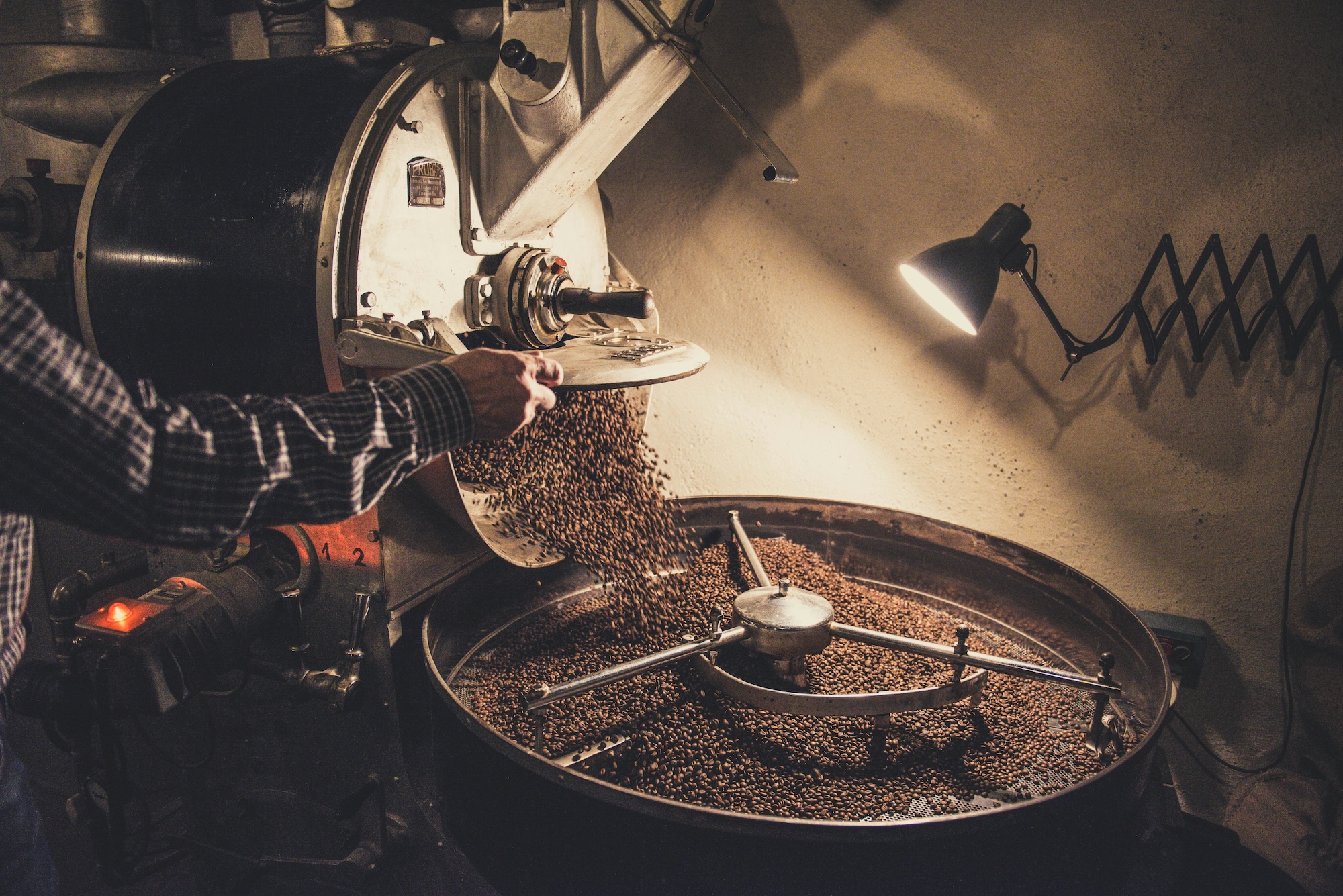
Which are the best coffee roasters in Europe? There is no single answer, but there are names that everyone who gets into specialty coffee comes across sooner or later. Europe now has one of the liveliest coffee scenes in the world, from the Nordic roasters who made light roasting famous, through Berlin and Rotterdam, to Barcelona, which has gone from dark-espresso country to one of the most interesting coffee cities around. We have picked 15 roasters whose coffees are worth tasting, and we'll show you how to try them even when you're not traveling.
Quick answer: Some of the most distinctive European roasters are The Barn and Five Elephant in Berlin, Schot and Manhattan Coffee Roasters in Rotterdam, Gardelli in Italy, Koppi in Sweden and Nomad Coffee in Barcelona. You rarely find most of them in local shops, so the easiest options are buying directly from the roaster or using a subscription that brings their coffees to you.
What makes a roaster "the best"?
Roaster rankings are always a little subjective: some people love bright filter coffees from a light roast, others want a sweet, full-bodied espresso. Still, top roasters tend to have a few things in common:
- High-quality green coffee. The best roasters buy directly from farmers or through importers who know the individual producers. Without great raw material there is no great coffee.
- Transparency. The bag tells you the farm or washing station, the variety, the processing, the altitude and often how much the roaster paid for the coffee.
- Seasonality. The lineup changes with the harvests, so coffees arrive fresh rather than after a year in a warehouse.
- Consistent roasting. The same coffee tastes just as good in March as it does in October.
- Industry recognition. Roasting and barista competitions aren't everything, but they do say something about a roaster's standards.
Three European schools of coffee
Before we get to the individual roasters, a quick orientation helps. Simplifying a little, the European scene splits into three currents:
- The Nordic school (Scandinavia, Finland, partly Berlin and the Netherlands): light roasts that highlight fruit, floral notes and bright acidity. The coffees can resemble tea or juice and shine most as filter coffee.
- The Central and Western European current (Germany, the Netherlands, Belgium, Austria): modern, clean roasting with an emphasis on sweetness and balance. The coffees work as both filter and espresso.
- Southern Europe (Spain, Italy, Portugal): countries with a dark-espresso tradition, where a young generation of roasters is raising the bar and working carefully on sweetness, including in milk drinks.
If you want to know how roast level affects flavor, read Light vs. Dark Roast Coffee.
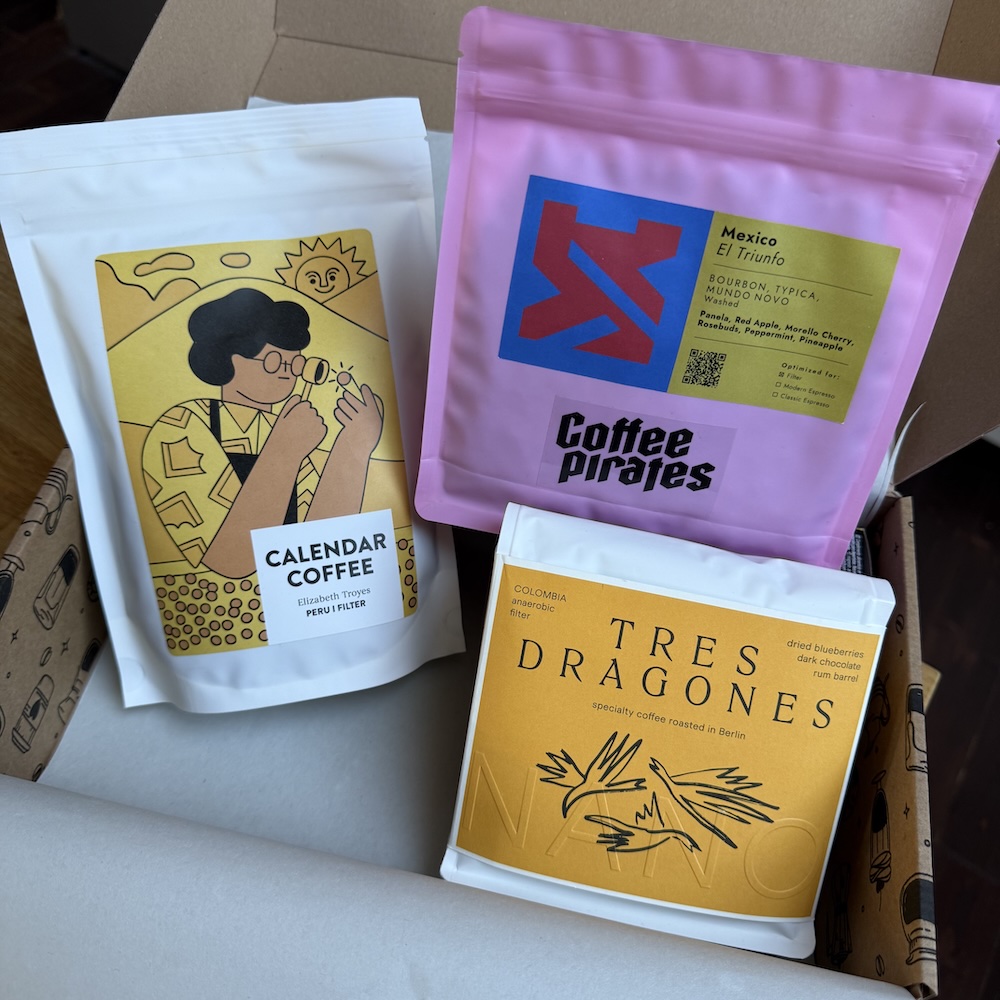
Three roasters, three styles in one box
Every KAVI box brings together coffees from three European roasters, often from different coffee schools. You can see this month's lineup on the Coffee of the Month page.
15 European roasters worth tasting
1. The Barn – Berlin, Germany
Ralf Rüller founded the Berlin roastery and café THE BARN in 2010 as a response to how little quality coffee the city offered at the time. Today it is one of the best-known names on the European scene and one of the roasters that helped turn Berlin into a coffee capital. Expect clean, sweet coffees with pronounced fruit.
2. Five Elephant – Berlin, Germany
Five Elephant was founded in 2010 by Kris and Sophie Schackman. From the start it has built on transparent, long-term relationships with growers and on sustainable production. You'll recognize it by its clean single-origin profiles and minimalist packaging, and if you're in Berlin, stop by for their famous cheesecake too.
3. 19grams – Berlin, Germany
19grams is one of the pioneers of specialty coffee in Germany. It started back in 2002 under the name Tres Cabezas and has been building direct relationships with farmers around the world ever since. It is proof that the Berlin scene didn't appear overnight.
4. Gardelli Specialty Coffees – Forlì, Italy
Italy's Gardelli in Forlì shows that one of the most respected roasters in the world can come from the land of dark espresso. Its founder, Rubens Gardelli, is a World Coffee Roasting Champion, and the roastery lives by the motto "acidity is not a crime". Its hallmark is the pronounced natural sweetness and complexity Gardelli manages to draw out of every harvest.
5. Koppi Roasters – Helsingborg, Sweden
Koppi opened in Helsingborg in 2007 as a café that roasted its own coffee. It is run by Anne Lunell and Charles Nystrand, a married couple and barista champions who turned their hobby into one of the most respected roasters in the world. Today Koppi supplies partners on every continent and is a textbook example of the Nordic style.
6. Morgon Coffee Roasters – Gothenburg, Sweden
Morgon believes specialty coffee should make sense to everyone, not just experts. Its coffees are typically Nordic: light, bright and seasonal. They come in square bags whose color and shape nod to the shipping containers in Gothenburg's harbor.
7. Schot Coffee Roasters – Rotterdam, Netherlands
John Schot founded the roastery and coffee bar Schot in 2011, after working as a coffee trader and getting to know growers around the world. That trading background shows in their selection: Schot has a feel for coffees that are distinctive but never eccentric.
8. Manhattan Coffee Roasters – Rotterdam, Netherlands
Manhattan Coffee Roasters was founded in 2017 by Esther Maasdam and Ben Morrow, two coffee-scene veterans who first met at a latte art championship. Between them they have more than thirty years of experience, and their coffees are among the most interesting the Netherlands has to offer today, often rare varieties and experimental processing.
9. LOT61 – Amsterdam, Netherlands
Amsterdam's LOT61 was founded in 2013 by two friends from Sydney, Adam Craig and Paul Jenner. Their slogan, "Born in Sydney. Raised in Brooklyn. Roasting in Amsterdam.", sums up the journey they took. The roastery is a certified B Corp, a certification that assesses a company's social and environmental responsibility.
10. Caffenation – Antwerp, Belgium
Since 2003, Caffenation has been showing that specialty coffee can be approachable, honest and full of character. Founder Rob Berghmans bet on something few people in Belgium believed in back then: that light roasting and transparent sourcing would change the way people think about coffee.
11. Nomad Coffee – Barcelona, Spain
Nomad started as a small coffee stall in London and grew into one of the best-known specialty roasters in Spain. Its founder is Jordi Mestre, a barista and Spanish Barista Champion. Nomad focuses on traceability from producer to cup and on barista education.
12. Ineffable Coffee – Seville, Spain
The name of Seville's Ineffable Coffee comes from the Latin for "indescribable". The roastery won the 2024 Spanish Coffee Roasting Championship and combines a scientific approach with respect for the origin of every bean. It is proof that the Spanish scene has long since stretched beyond Barcelona.
13. Coffee Pirates – Vienna, Austria
Coffee Pirates is one of the pioneers of specialty coffee in Vienna and was the city's first third-wave roaster to earn organic certification. It combines respect for Vienna's coffee house tradition with a modern, uncompromising approach to bean quality, so it's well worth a stop if you're in town.
14. STOW Coffee Roasters – Kamnik, Slovenia
Since 2015, STOW has been based in Kamnik, at the foot of the Kamnik Alps. Roaster Aleš Turšič has gradually built it into a roastery, cafés in Ljubljana and a coffee academy under one roof. If you're looking for light-roasted seasonal coffee from Slovenia, STOW is the first name you'll come across.
15. Calendar Coffee – Galway, Ireland
Ireland's Calendar Coffee was founded in 2018 by Zarah Lawless and Daniel Boobier on a simple belief: coffee tastes best when it is treated as a fresh harvest, not as a commodity off the shelf. Seasonality is right there in the name, and in the lineup.
More European roasters worth your attention
Fifteen names are only the beginning. Add these to your list too:
- Coutume Café (Paris): founded in 2011 by Australian Tom Clark and Frenchman Antoine Nétien, it changed the way Parisians think about coffee.
- Fjord Coffee Roasters (Berlin): a Berlin roaster focused on clean, distinctive flavor profiles.
- Three Marks Coffee (Barcelona): three friends with almost the same name, two of whom previously worked at Nomad Coffee.
- Andy Roasters (Antwerp): a young roaster founded in 2020 that approaches coffee as an art hidden in everyday life.
- MABÓ Coffee (Bucharest): the roaster behind it is a World Coffee Roasting Championship runner-up.
- Paloma Coffee (Wrocław): at the roaster is the 2019 runner-up of the Polish roasting championship.
- Miga Coffee (Racibórz): a Polish roaster close to the Czech border, run by a certified Q Grader.
- Frukt Coffee Roasters (Turku): a Finnish roaster with a "less, but better" philosophy and a focus on natural fruitiness.
- Backstage Roasters (Vilnius) and Kalve (Riga): proof that the Baltic scene has plenty to offer.
- Fábrica Coffee Roasters (Lisbon): a pioneer of specialty coffee in Portugal, with cafés in Lisbon and Porto.
We bring all of these roasters to you
The roasters in this guide are among the 46 roasters from 19 countries whose coffees rotate through KAVI boxes. We come back to the same roaster roughly once a year.
Legends you may have heard of
No guide to European roasters is complete without the names that shaped the whole scene. Norway's Tim Wendelboe, the 2004 World Barista Champion, built a roastery in Oslo that became the model for the Nordic style. Copenhagen's Coffee Collective showed what fair, transparent buying directly from farmers looks like. And London's Square Mile Coffee Roasters, co-founded by James Hoffmann, helped kick-start the modern coffee scene in the UK.
How to taste coffee from European roasters without traveling
You won't find most of the roasters on our list in local shops. You have three options:
- Order directly from the roaster's online shop. It works, but expect international shipping costs that, for one or two bags, often exceed the price of the coffee.
- Buy coffee when you travel. If you're heading to Berlin, Vienna or Barcelona, set aside time for cafés and bring beans home. The European Coffee Trip café map is a handy planning tool.
- A coffee subscription that brings European roasters to you. That is how the KAVI subscription works: every month we pick coffees from three European roasters and deliver them to a Packeta pickup point or parcel locker of your choice. We work with 46 roasters from 19 countries, from Ireland to Romania, and you'll find them all on the Our Roasters page.
What to watch for when buying coffee from a roaster abroad
- Roast date. Coffee from abroad travels for days or even weeks. Specialty coffee doesn't mind; in fact it needs to rest after roasting. And a light roast in a valve bag keeps its flavor well for about two to three months from roasting.
- Espresso or filter? Nordic roasters often roast very light, even when a coffee is labeled as espresso. If you have a bean-to-cup machine, reach for coffees from Belgium, the Netherlands or Southern Europe instead.
- Bag size. Many roasters pack coffee in 250 g bags, but some use 200 g or 340 g. Compare the price per gram.
- Tasting notes. Descriptions like "juicy, with notes of blackcurrant" mean the coffee will be fruitier, not that it contains added flavoring. We explain why you don't need to fear acidity in Why "Sour" Coffee Doesn't Have to Scare You.
Frequently asked questions
Which European country has the best roasters?
Scandinavia, Germany (especially Berlin) and the Netherlands have traditionally been seen as the coffee heavyweights. In recent years, though, Spain, Belgium, Poland and Romania have also been making their mark, with roasters that win at competitions.
Why do Nordic roasters roast so light?
A light roast preserves the flavors the coffee developed on the farm: fruit, floral notes and acidity. A dark roast covers them up with bitterness and roasty notes. Nordic roasters want you to taste the coffee in the cup, not the roast.
Is coffee from a roaster abroad still fresh after traveling halfway across Europe?
Yes. Specialty coffee needs several days to weeks of rest after roasting before it tastes its best, and in a valved bag it holds its flavor for weeks. A short trip across Europe won't hurt it.
Are local roasters worse than the big European names?
Not at all. Many countries now have well-developed specialty coffee scenes of their own. Coffees from roasters abroad simply offer different roast styles and a selection you rarely find in your local market, and that is exactly what makes them interesting.
Want to taste Europe's best roasters without traveling? With a KAVI coffee subscription, coffees from three European roasters arrive every month at a Packeta pickup point of your choice. You can pause or cancel any time.